
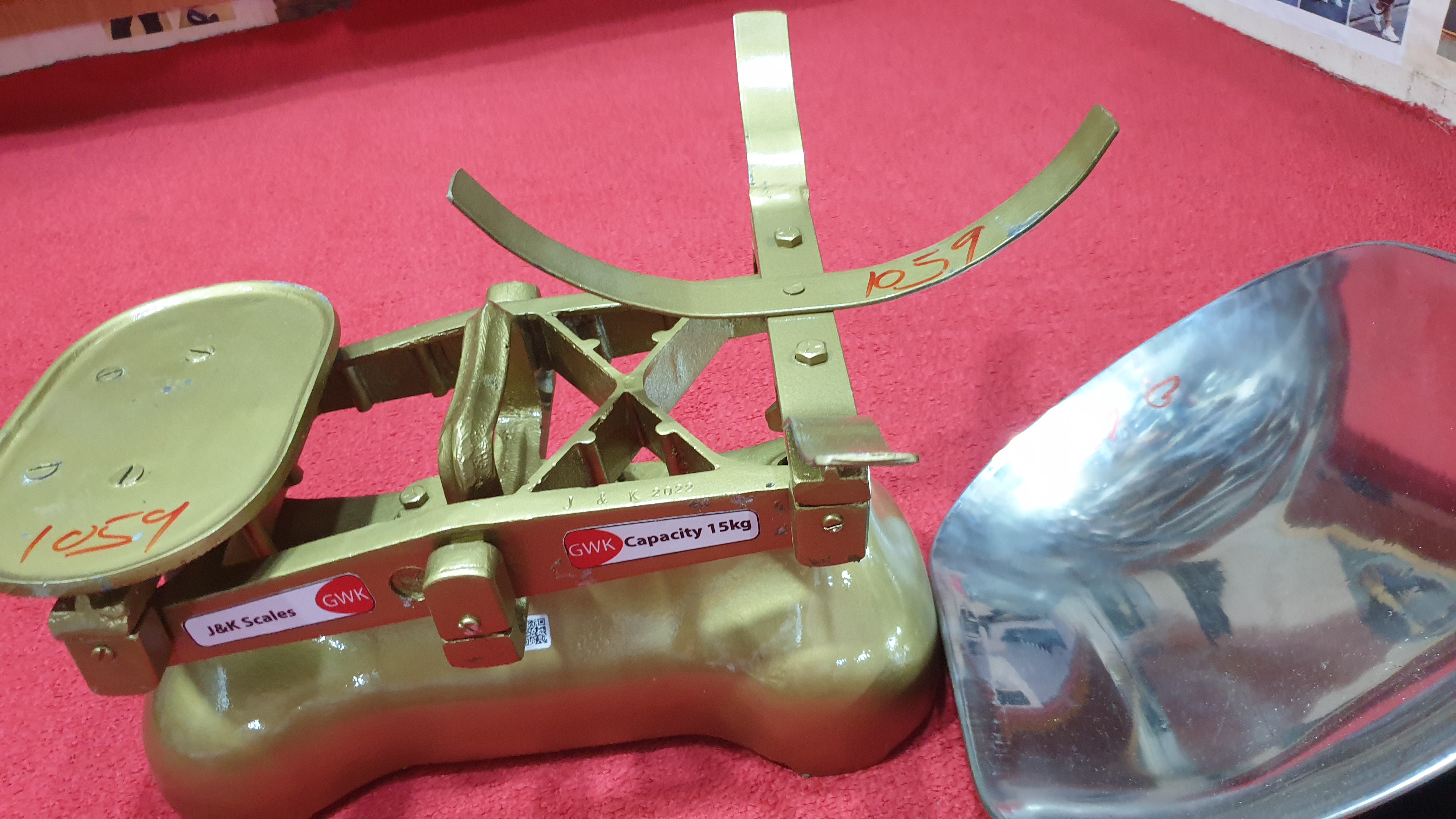
Weighing scales are essential tools for businesses across Uganda, supporting fair trade, accurate pricing, inventory control, and quality assurance. From open markets and retail shops to factories and logistics hubs, different types of weighing scales are used depending on the application, capacity, and required accuracy.
Below are the most common types of weighing scales available for commercial use in Uganda and how they are used.
1. Platform Weighing Scales
Platform weighing scales are among the most widely used commercial scales in Uganda. They consist of a flat platform supported by load cells and a digital indicator.
Common Uses:
- Weighing sacks, cartons, and pallets
- Wholesale produce markets
- Warehouses and factories
- Agricultural collection centers
Advantages:
- Handle heavy loads
- Durable and reliable
- Suitable for general commercial and industrial use
2. Bench Weighing Scales
Bench scales are smaller scales designed to sit on tables or counters, making them ideal for medium-sized goods.
Common Uses:
- Retail shops and supermarkets
- Bakeries and restaurants
- Packaging and sorting operations
Advantages:
- Compact and easy to use
- Good balance of accuracy and capacity
- Affordable for small and medium businesses
3. Retail (Shop) Weighing Scales
Retail weighing scales are commonly used in markets and shops where goods are sold by weight.
Common Uses:
- Grocery stores
- Fruit and vegetable vendors
- Butcheries and fish markets
Advantages:
- Clear digital displays
- Often include price-computing functions
- Improve speed and transparency in sales
4. Counting Weighing Scales
Counting scales calculate the number of items based on a known unit weight.
Common Uses:
- Hardware stores
- Manufacturing and assembly plants
- Warehouses and stock control
Advantages:
- Saves time compared to manual counting
- Improves inventory accuracy
5. Crane and Hanging Scales
Crane or hanging scales are used where items cannot be placed on a platform and must be weighed while suspended.
Common Uses:
- Construction sites
- Scrap metal yards
- Industrial and recycling businesses
Advantages:
- Portable and easy to use
- Ideal for bulky or irregular loads
6. Analytical and Precision Balances
These are high-accuracy scales designed for small, lightweight items.
Common Uses:
- Laboratories
- Pharmaceutical and chemical industries
- Jewelry and research institutions
Advantages:
- Extremely accurate measurements
- Essential for quality control and research
7. Weighbridges (Truck Scales)
Weighbridges are large-scale systems used to weigh vehicles and their loads.
Common Uses:
- Transport and logistics companies
- Agricultural exporters
- Mining, quarrying, and industrial sites
Advantages:
- Can weigh entire trucks
- Helps prevent overloading
- Supports legal and safety compliance
8. Moisture Analyzers
Moisture analyzers are specialized weighing devices used to determine moisture content in products.
Common Uses:
- Grain and coffee trading
- Food processing
- Quality control in agriculture
Advantages:
- Helps determine product quality
- Supports fair pricing based on moisture levels
Conclusion
Uganda’s commercial sector relies on a wide range of weighing scales to support trade, industry, agriculture, and logistics. Each type of weighing scale serves a specific purpose, and choosing the right one depends on the nature of the business, required capacity, and level of accuracy.
For businesses that sell goods by weight, it is important to use accurate, well-maintained, and regularly calibrated scales, preferably compliant with national standards. This ensures fair trade, customer trust, and efficient operations.