Weighing scales come in many types, each designed for specific tasks. Whether for home use, retail, health, or industry, choosing the right type ensures accurate measurements and better efficiency.
There are different types of weighing scales, each designed for specific purposes and functionalities. Understanding these types can help businesses, manufacturers, retailers, and service providers choose the right scale for their operations
At Accurate Weighing Scales, we offer a wide range of high-quality weighing scales suitable for various applications. Below, we explore the different types of weighing scales and their key functions.
BUY NOW
1. Digital Weighing Scales
Modern, battery-powered scales that use electronic sensors for fast, precise readings.
Used for: Kitchens, personal weight tracking, retail, industrial, laboratories
Function: Digital weighing scales display weight readings electronically, offering precise and easy-to-read measurements. They use load cells to convert the force of the object’s weight into an electrical signal that is then displayed on a screen.
Common Uses:
- Retail (supermarkets and grocery stores)
- Laboratories (for precise measurement of small items)
- Medical (for weighing patients)
- Food industry (for measuring ingredients)
Advantages:
- High accuracy
- Easy to read digital display
- Quick and efficient weighing
2. Mechanical Weighing Scales
3. Traditional spring-based scales with analog dials—no batteries required.
Used for: Outdoor markets, home use in low-power areas
Function: Mechanical weighing scales, also known as analog or spring scales, use mechanical components like springs to measure weight. When an object is placed on the scale, the spring stretches, and the reading is displayed on a dial or pointer. These scales don’t require a power source.
Common Uses:
- Industrial (heavy-duty weighing of materials)
- Home use (for simple weighing tasks)
- Retail (basic weighing needs)
Advantages:
- No need for batteries or power supply
- Simple to operate
- Durable and long-lasting
4. Platform Weighing Scales
Heavy-duty scales with a large flat surface for weighing bulk goods.
Used for: Warehouses, factories, agricultural businesses
Function: Platform weighing scales consist of a large, flat platform where heavy items can be placed for weighing. These scales are designed to measure large or bulky objects, providing accurate weight readings on a large display.
Common Uses:
- Industrial applications (weighing large machinery or goods)
- Warehouses (for shipping and receiving goods)
- Agricultural (for weighing livestock or bulk produce)
Advantages:
- Suitable for large, heavy objects
- Provides high accuracy and stability
- Durable and robust construction
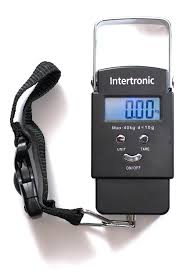
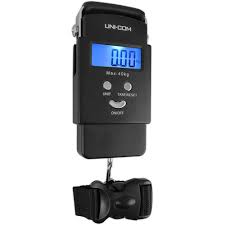
5. Hanging Weighing Scales
Scales that suspend items from a hook—either analog or digital.
Used for: Market stalls, fishing, weighing sacks or produce
Function: Hanging scales use a hook or sling to suspend an object while its weight is measured. These scales are commonly used for items that cannot be easily placed on a flat surface, such as large bags, fish, or livestock. They typically feature a dial or digital display for weight readings.
Common Uses:
- Markets (for weighing fish, produce, or bulk items)
- Agriculture (for weighing livestock or produce)
- Warehouses (for weighing hanging goods)
Advantages:
- Space-saving design
- Portable and easy to use
- Accurate for irregularly shaped objects
6. Bench Weighing Scales
Compact digital scales designed to sit on a table or counter.
Used for: Pharmacies, bakeries, packaging small items
Function: Bench weighing scales are compact, portable scales designed for smaller items and used on flat surfaces. They often have a digital display and are used for weighing light to medium-sized objects.
Common Uses:
- Retail (weighing packaged goods)
- Laboratories (measuring ingredients or chemicals)
- Small manufacturing (for quality control)
Advantages:
- Compact and easy to store
- Easy-to-read digital display
- High precision for small items
6. Counting Weighing Scales
Function: Counting scales are designed to count a specific number of items based on their weight. This type of scale automatically calculates the number of pieces in a batch by dividing the total weight by the weight of one individual item. These scales are widely used in industries dealing with small parts like screws, nuts, and other components.
Common Uses:
- Manufacturing (for counting small parts)
- Retail (for packaging and sorting items)
- Warehouses (for counting inventory)
Advantages:
- Increases efficiency and accuracy in counting
- Ideal for bulk item weighing
- Reduces manual counting errors
7. Floor Weighing Scales
Function: Floor weighing scales are heavy-duty scales designed to measure the weight of large, bulky, or heavy objects. They typically have a low profile and can accommodate heavy loads such as machinery, pallets, and industrial items. These scales are ideal for manufacturing, shipping, and distribution centres.
Common Uses:
- Industrial applications (weighing large equipment or machinery)
- Warehouses (for weighing pallets)
- Shipping (for freight and cargo weighing)
Advantages:
- Suitable for extremely heavy loads
- Provides stable readings for large objects
- Durable and robust for industrial use
8. Crane Weighing Scales
Function: Crane weighing scales are designed to be used with cranes to weigh heavy items that are being lifted or moved. These scales are equipped with load cells and display the weight of the suspended load. They are commonly used in industries that involve heavy lifting, such as construction, shipping, and logistics.
Common Uses:
- Construction (for weighing construction materials)
- Shipping (for weighing cargo)
- Manufacturing (for lifting heavy components)
Advantages:
- Ideal for weighing suspended loads
- High accuracy in industrial settings
- Built to withstand heavy-duty use
9. Medical Weighing Scales
Function: Medical weighing scales are specifically designed to measure the weight of individuals in a healthcare setting. These scales are often equipped with features such as body fat analysis, BMI measurement, and other health metrics. They are highly accurate and designed to meet medical standards.
Common Uses:
- Hospitals (for weighing patients)
- Clinics (for weight management programs)
- Fitness centres (for health monitoring)
Advantages:
- High precision for accurate medical readings
- Often includes additional health metrics
- Easy-to-use design for patient comfort
10. Price Computing Scales
Digital retail scales with dual displays and built-in calculators for cost per weight.
Used for: Shops, supermarkets, butcheries
Different Types of Weighing Scales and Their Functions
The right type of weighing scale depends on the specific needs of your business or operation. Whether you’re managing retail transactions, industrial production, agriculture, or healthcare, understanding the various types of scales and their functions can help you choose the best one for your purposes.
At Accurate Weighing Scales, we offer a wide selection of high-quality weighing solutions tailored to meet the needs of businesses in Uganda. Explore our product offerings and find the perfect scale for your requirements. For more information and expert advice, visit our website.