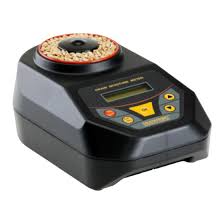
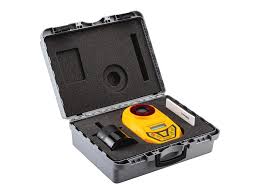
A grain moisture meter is a device used to measure the moisture content in grains such as maize, rice, wheat, beans, millet, and sorghum. It helps farmers, traders, and millers determine whether the grain is dry enough for harvesting, storage, or sale, helping to prevent spoilage, Mold, and weight loss.
🔧 How It Works:
- The meter uses electrical resistance, capacitance, or infrared heat to assess how much water is in a sample of grain.
- Some require you to insert a probe into the grain or pour a sample into a test chamber.
- Results are usually displayed on a digital screen as a percentage of moisture (e.g., 13.5%).
✅ Why It’s Important:
- Too much moisture can cause grains to rot or grow fungus.
- Too little moisture can lead to weight loss and reduced profits.
- Helps meet market standards for safe grain storage and export.
Grain moisture meters are essential for post-harvest quality control and maximizing profits.
Types of Grain Moisture Meters
Grain moisture meters come in several types, each with unique features suited to different environments and accuracy needs:
Portable/Handheld Moisture Meters
Description: Compact, battery-operated devices used directly in the field or storage.
How it works: Insert grain into the built-in chamber or attach a probe.
Best for: Farmers, small-scale traders
Examples: GMM mini, Farmex MT-PRO
✅ Pros: Easy to carry, quick results
❌ Cons: Slightly less accurate than lab-grade models
2. Pin-Type Moisture Meters
Description: Use sharp metal pins/probes to penetrate grain or grain bags.
How it works: Measures electrical resistance between pins, which varies with moisture.
Best for: Bagged grains, deep sampling GM640
✅ Pros: Good for stored grain
❌ Cons: Can damage samples slightly
3. Capacitance-Type Moisture Meters
Description: Use a sample chamber to measure changes in electrical capacitance.
How it works: Grain is poured into the chamber; meter reads moisture via dielectric properties.
Best for: Accurate, repeatable results on various grains
✅ Pros: High precision, suitable for different grain types
❌ Cons: More expensive than basic models
4. Infrared Moisture Meters
Description: Use heat and infrared to determine moisture by drying the sample.
How it works: Measures weight loss from moisture evaporation
Best for: Laboratory or industrial use
✅ Pros: Highly accurate
❌ Cons: Slower and costlier; not field-portable
5. Online/Continuous Moisture Meters
Description: Installed on grain processing lines or silos for real-time monitoring.
How it works: Continuously measures grain moisture as it flows
Best for: Grain processing plants, mills
✅ Pros: No manual input, consistent tracking
❌ Cons: Requires professional setup and calibration
6. Universal/Grain-Type Selectable Meters
Description: Digital meters with settings for multiple grain types (maize, rice, wheat, etc.)
How it works: User selects grain type from the menu for specific calibration
Best for: Multi-crop farmers and traders Draminski GMM mini Pro
✅ Pros: Versatile, saves time
❌ Cons: Requires proper calibration for accuracy
To measure moisture effectively, you need accurate tools. Accurate Weighing Scales provides a range of moisture meters in Uganda for different industries:
- Grain Moisture Meters: Ideal for monitoring moisture in cereals like maize and rice.
- Soil Moisture Meters: Essential for agriculture and irrigation planning.
- Timber Moisture Meters: Designed for wood and construction materials.
Explore these tools on Accurate Weighing Scales’ website.
Applications of Moisture Measurement in Uganda
- Agriculture: Helps farmers determine the readiness of crops for storage or sale.
- Construction: Ensures materials like concrete and sand meet required moisture levels for structural integrity.
- Food Processing: Maintains consistency and quality in products like flour, sugar, and spices.
- Timber Industry: Prevents warping and cracking by ensuring proper moisture levels.
Why Choose Accurate Weighing Scales?
At Accurate Weighing Scales, we provide high-quality moisture meters that ensure precise results in Uganda’s diverse environments.
- Durability: Built to handle Uganda’s tropical conditions.
- Accuracy: Advanced technology ensures reliable readings.
- Affordability: Competitive prices starting from UGX 500,000.
- Support: Expert advice and after-sales service.
Importance of Managing Moisture in Uganda
- Prevents Losses: Proper moisture control reduces spoilage in stored grains and food.
- Enhances Productivity: In agriculture, correct soil moisture levels boost crop yields.
- Improves Safety: Moisture control in construction prevents material failures.
Pricing and Availability
Accurate Weighing Scales offers moisture meters suitable for various applications, with models starting at UGX 800,000. Visit our dedicated website to explore our inventory.
Conclusion
Understanding the different types of grain moisture meters is essential for optimizing processes and ensuring material quality in industries like agriculture, food processing, and construction. Accurate moisture measurement tools from Accurate Weighing Scales provide the precision and reliability you need.