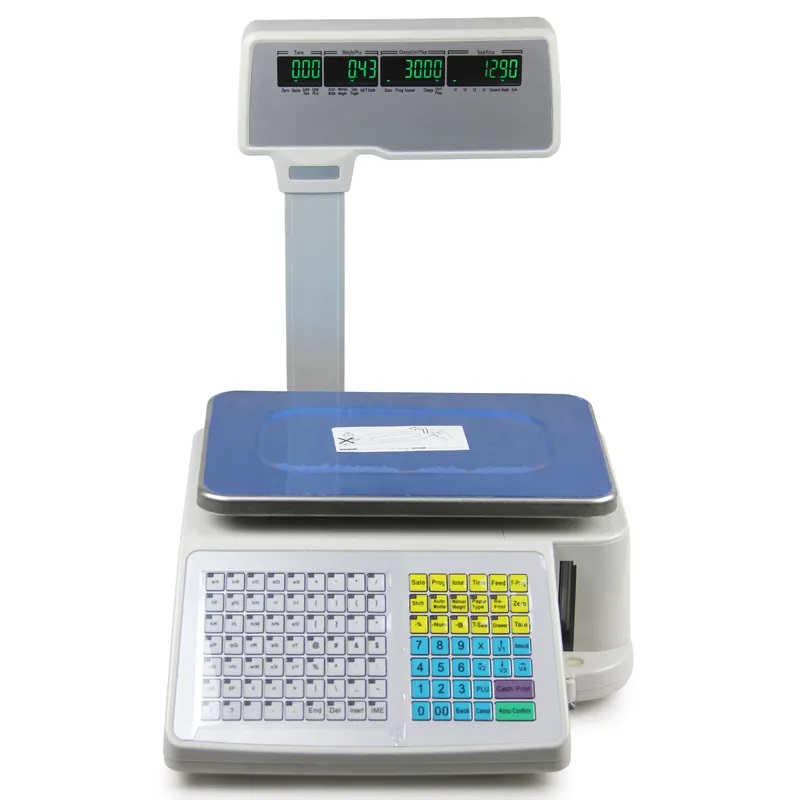
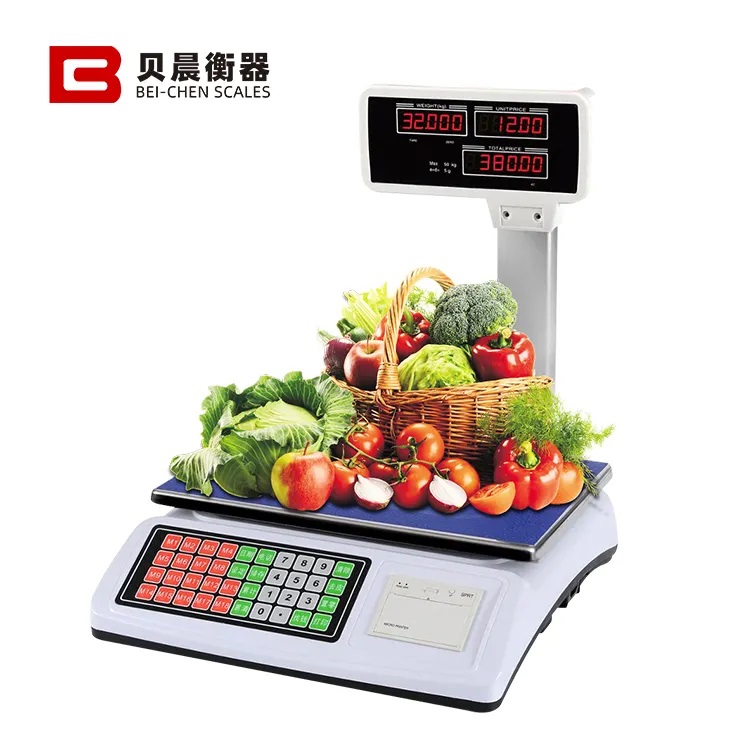
Efficient inventory management is essential for retail and food service businesses. Overstocking, understocking, and inaccurate data can lead to lost sales, waste, and operational inefficiencies. Barcode weighing systems provide a smart solution by integrating precise weighing with automated labeling and POS tracking, helping businesses streamline inventory management and maintain accurate stock levels.
1. Accurate Data Capture at the Source
Barcode weighing systems combine scales with label printers to record accurate weight and product information at the point of preparation or packaging. Each label contains a barcode, product name, weight, and price, which can be scanned at checkout. This ensures that inventory data is accurate from the very start, eliminating errors caused by manual entry.
2. Integration with POS and Inventory Systems
When barcode labels are scanned, the data is automatically updated in the POS and inventory management systems. This real-time synchronization allows managers to monitor stock levels instantly, track sales trends, and make informed replenishment decisions.
3. Reduced Stock Discrepancies
Manual weighing and labeling often lead to discrepancies between recorded inventory and actual stock. Barcode weighing systems minimize these errors by automating the process, ensuring that every sale and every weight measurement is accurately reflected in the inventory system.
4. Improved Efficiency in High-Volume Environments
In supermarkets, butcher shops, delis, and bakeries, staff handle large volumes of products daily. Barcode weighing systems allow items to be weighed, labeled, and recorded simultaneously, reducing processing time and freeing staff to focus on other tasks.
5. Minimized Food Waste and Overstocking
Accurate portioning and real-time stock updates prevent overstocking and over-preparation, helping retailers reduce waste. This is especially important for perishable items such as fresh produce, meat, and baked goods, where precise inventory control directly impacts profitability.
6. Better Reporting and Forecasting
Barcode weighing systems generate detailed data that can be used for sales analysis, inventory reporting, and forecasting. Retailers can identify fast-moving products, seasonal trends, and areas for optimization, enabling smarter purchasing and inventory decisions.
7. Enhanced Compliance and Traceability
Retailers must comply with legal regulations regarding weights, measures, and product labeling. Barcode weighing systems provide traceable, accurate labels for every product, simplifying audits and ensuring regulatory compliance.
Conclusion
Barcode weighing systems streamline inventory management by combining precise weighing, automated labeling, and real-time data integration. They reduce errors, improve efficiency, minimize waste, and provide actionable insights for smarter inventory decisions. For retailers and food service businesses looking to optimize operations and maintain accurate stock levels, investing in barcode weighing systems is a smart, long-term solution.