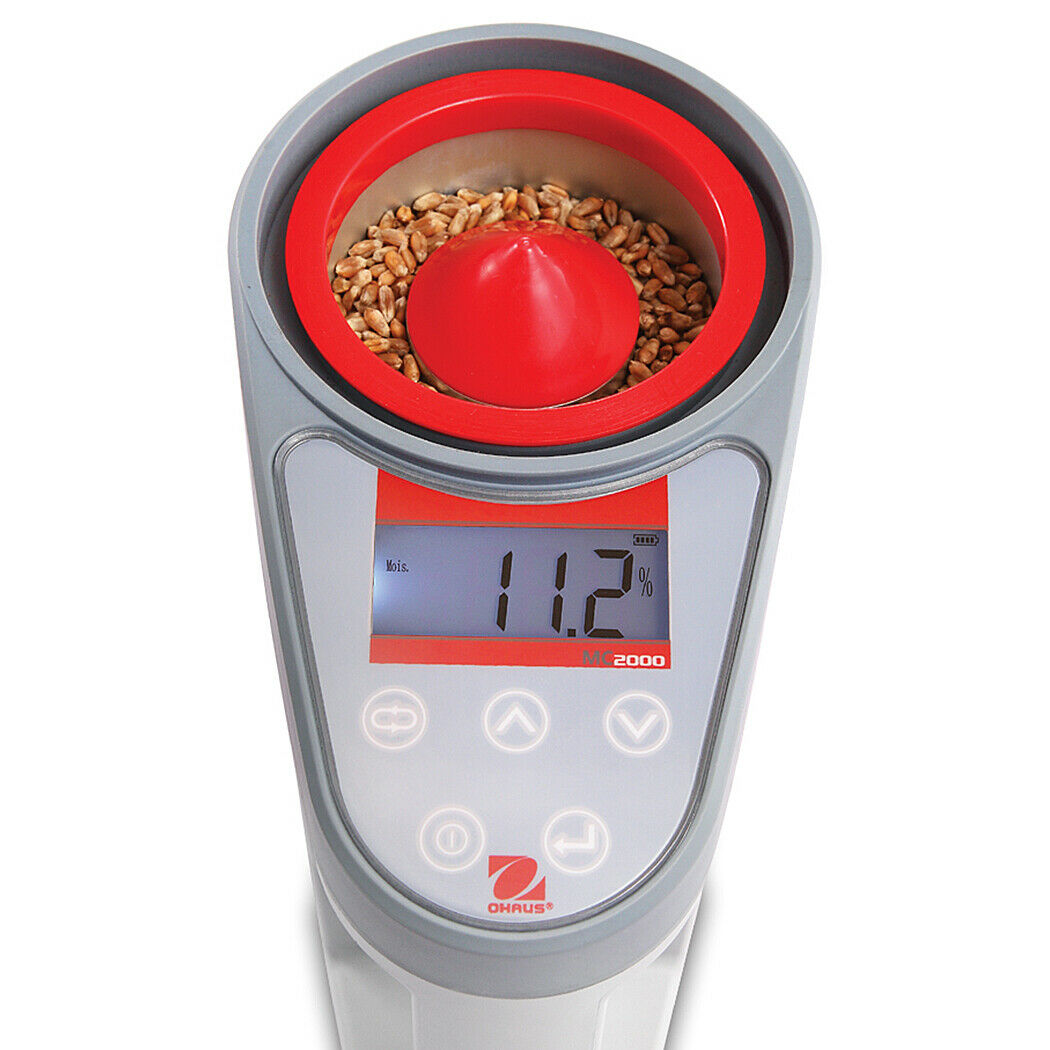
soybean moisture meters have become essential tools for determining harvest timing and avoiding dockage at the elevator. Because soybeans have a high oil content and varying seed sizes, the best portable meters now use high-frequency capacitive circuits or NIR technology to ensure the oil doesn't interfere with the moisture reading.
1. Top Recommended Portable Soybean Meters (2026)
|
Model |
Technology |
Soybean Range |
Key Feature |
|
Dickey-john mini GAC 2500 BT |
High-Frequency Cap. |
5% – 35% |
Bluetooth: Syncs with phone; no pre-weighing required. |
|
Wile 200 |
Capacitive |
5% – 25% |
Test Weight: Measures grain density + moisture + temp. |
|
Draminski GMDM2 |
Capacitive |
4% – 30% |
Ruggedness: Built for field use; very fast results (<10s). |
|
AgraTronix MT-PRO+ |
Resistance |
5% – 40% |
Value: Best for quick "go/no-go" field checks. |
|
GrainSense GO |
Handheld NIR |
5% – 25% |
Smart Data: Measures Protein and Oil alongside moisture. |
2. Why Soybeans Require Specific Meters
Soybeans are unique compared to corn or wheat. In 2026, look for these specific "soybean-ready" capabilities:
- Large Sample Cells: Soybeans are bulky. Entry-level meters with tiny sample cups often produce "random bean error." Look for meters like the Wile 200 or mini GAC that use a larger volume (approx. 100g–200g) for a better average.
- Automatic Temperature Compensation (ATC): Soybeans are often harvested in varying temperatures. A meter without ATC can be off by as much as 1.5% if the beans are cold in the morning and hot in the afternoon.
- Non-Destructive Testing: In 2026, high-end portable meters use "Whole Grain" sensing. You no longer need to grind the soybeans, which saves time and prevents the loss of volatile oils during the test.
3. "Smart" Connectivity in 2026
Modern soybean meters like the mini GAC 2500 BT allow you to:
- Calibrate to the Elevator: Use your smartphone app to "offset" the meter so it perfectly matches the local grain elevator's official moisture reading.
- GPS Tagging: Automatically record the moisture level alongside the GPS coordinates of the field, helping you create a "moisture map" of your farm.
- Cloud Sync: Send harvest data directly to your buyer or farm manager to coordinate delivery and storage.
4. Critical Moisture Ranges for Soybeans
- Harvest Ideal: 13% – 14%. Harvested at 13%, they are ready for sale without dockage.
- Safe Long-Term Storage: 11% – 12%. Anything above 13% in a bin risks mold and heat damage.
- Brittleness Risk: Below 10%. Soybeans become very fragile and prone to "splitting" during handling, which lowers their grade.
5. Maintenance for Accuracy
To maintain $\pm 0.1\%$ to $0.5\%$ precision:
- Clean the Electrodes: Soybean dust is oily. Wipe the inside of the measuring chamber with a microfiber cloth every 20–30 tests.
- Fresh Batteries: Weak batteries are the #1 cause of "flickering" or inaccurate readings in digital meters.
- Annual Check: Always compare your handheld's reading against a certified benchtop meter at the start of every harvest season.