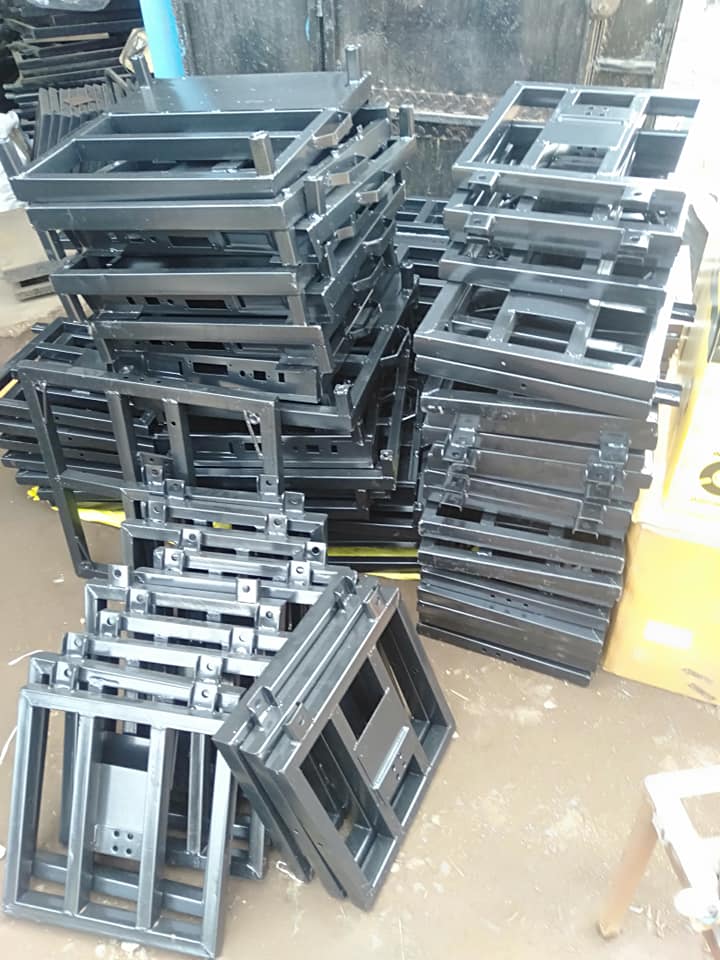
robust digital industrial floor platform sizes are standardized across the global logistics and manufacturing sectors to accommodate standard pallet dimensions and heavy industrial containers.
The sizing of a floor scale is typically dictated by the footprint of your loading equipment (pallet jacks vs. forklifts) rather than just the weight itself.
1. Standard Square Platform Sizes
These are the industry-standard "off-the-shelf" sizes that fit most shipping and warehouse applications.
|
Size (Metric) |
Size (Imperial Approx.) |
Primary Use Case |
|
0.8m x 0.8m |
$32" \times 32"$ |
Compact drums, small crates, and gas cylinders. |
|
1.0m x 1.0m |
$40" \times 40"$ |
Small pallets and industrial bags. |
|
1.2m x 1.2m |
$48" \times 48"$ |
The Industry Standard. Fits a standard Euro or US pallet perfectly. |
|
1.5m x 1.5m |
$60" \times 60"$ |
Oversized pallets, wide IBC containers, and heavy machinery parts. |
|
2.0m x 2.0m |
$80" \times 80"$ |
Large-scale bulk containers or livestock weighing. |
2. Rectangular & Oversized Platform Sizes
For specialized logistics or manufacturing lines, rectangular platforms prevent "overhang," which can damage load cells if the weight is uneven.
- 1.2m x 1.5m: Popular for long crates or double-stacked standard pallets.
- 1.2m x 1.8m: Often used in textile and paper industries for rolled goods.
- 1.5m x 2.0m: Common in metal recycling for weighing scrap beams and long pipes.
- 2.0m x 3.0m: Large-capacity "Heavy-Duty" platforms (up to 10 tons).
3. Structural Robustness: Height & Thickness
A truly "robust" 2026 model is defined by its profile height and deck thickness:
- Standard Profile: Typically 80mm to 110mm high. These are sturdy but require ramps for pallet jacks.
- Ultra-Low Profile: Roughly 35mm to 50mm high. These use specialized compact load cells so you can wheel a trolley on without long ramps.
- Deck Thickness: Professional-grade platforms use 5mm to 6mm checkered (diamond) plate. Budget models often use 3mm or 4mm, which can "dimple" or bend under concentrated 1-ton loads over time.
4. Specialized "Form Factors"
If a standard square/rectangular plate doesn't fit your workflow, these 2026 configurations are widely used:
- U-Shaped Scales: Typically 1200mm x 1200mm (outer) but with an open center. This allows a pallet jack to drop a load directly onto the frame without using ramps or lifting.
- Weigh Bars (Beams): Usually sold in pairs (e.g., 1200mm long). You can place them any distance apart to weigh oversized machinery or long containers.
- Pit-Mounted Sizes: Any of the standard sizes above can be installed in a pit. The "frame" size is usually 50mm larger than the platform to account for the concrete pit edging.
5. Summary Table: Capacity vs. Size
|
Target Load |
Suggested Size |
Suggested Build |
|
500kg – 1 Ton |
$1.0\text{m} \times 1.0\text{m}$ |
4mm Plate / Carbon Steel |
|
1 Ton – 3 Ton |
$1.2\text{m} \times 1.2\text{m}$ |
5mm Checkered Plate / Reinforced Beams |
|
5 Ton – 10 Ton |
$1.5\text{m} \times 1.5\text{m}+$ |
6mm+ Plate / Channel Iron Frame |