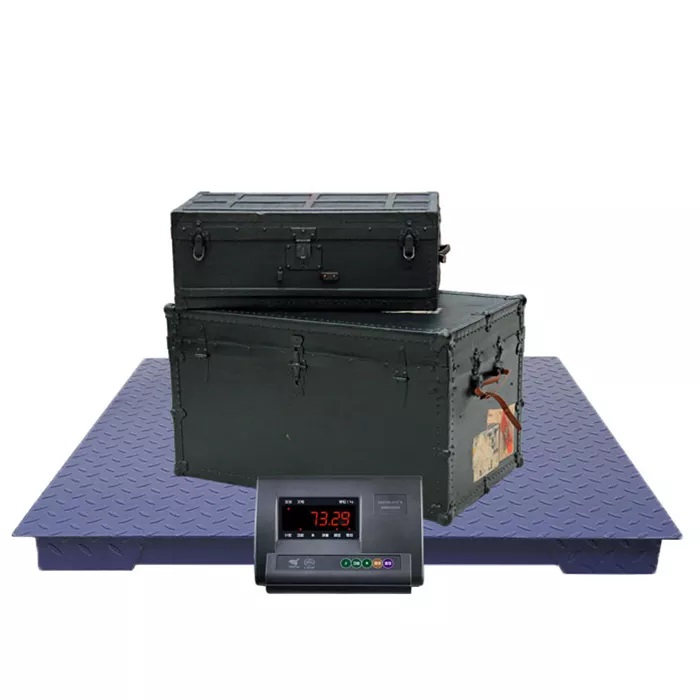
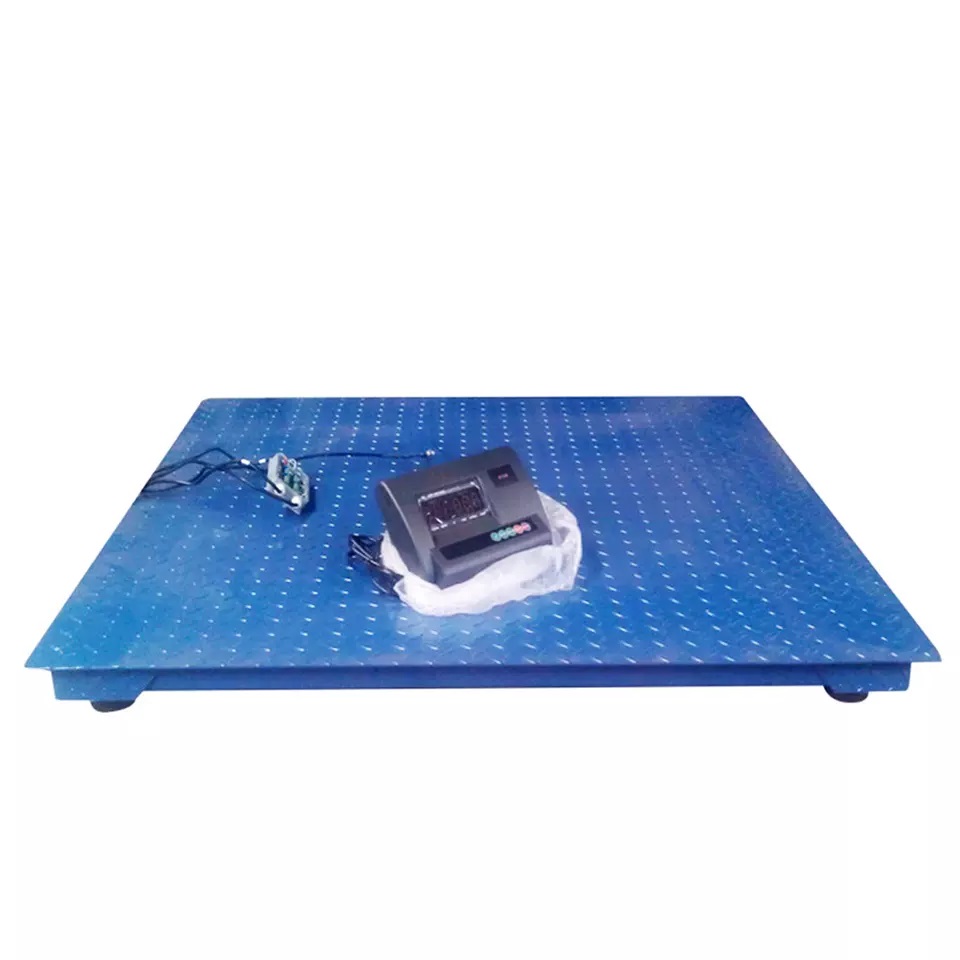
warehouse industrial floor scales are the heavy-duty workhorses of logistics, designed to withstand forklift impacts, heavy pallet loads, and constant use. High-quality models are now categorized not just by their weight capacity, but by their ability to integrate with warehouse management systems (WMS).
1. Top Industrial Brands for Warehouse Use (2026)
These brands are recognized for their structural integrity and long-term accuracy under heavy abuse:
- Mettler Toledo (VFS Series): The premium choice for high-precision manufacturing. Features "Smart" load cells that can self-diagnose health issues and communicate directly with cloud-based ERP systems.
- Rice Lake (RoughDeck): Widely considered the "toughest" scale in the industry. It uses a structural steel channel frame that prevents the platform from "bowing" under concentrated loads (like steel plates).
- Ohaus (Defender 3000/5000): The standard for general logistics. Reliable, easy to recalibrate, and often the most cost-effective "Legal-for-Trade" option.
- Adam Equipment (PT Series): Best for multitasking; these scales are easily "mixed and matched" with various indicators for counting parts or printing labels.
- Arlyn Scales: Known for "Surface Acoustic Wave" (SAW) technology, offering accuracy levels up to 20x higher than standard load cells—ideal for weighing high-value materials.
2. Platform Build: Carbon Steel vs. Stainless
Choosing the right material is the difference between a 20-year investment and a 2-year failure.
|
Material |
Best Use Case |
Pros/Cons |
|
Powder-Coated Carbon Steel |
Dry Warehouses, Shipping/Receiving |
Pros: Cost-effective, high impact strength. Cons: Will rust if the paint chips or if exposed to water. |
|
Checkered (Diamond) Plate |
General Pallet Weighing |
Pros: Provides grip for forklift tires and prevents pallet sliding. |
|
304/316 Stainless Steel |
Food, Pharma, Chemical |
Pros: Corrosion-resistant, "washdown" capable (IP69K). Cons: Significantly higher cost; softer than carbon steel. |
3. 2026 Pricing Benchmarks
Prices for "industrial quality" units have stabilized but vary based on certification and structural reinforcement:
- Standard Warehouse Scale ($1\text{t} – 3\text{t}$, $1.2\text{m} \times 1.2\text{m}$): $850 – $1,600 (NTEP/Trade Approved).
- Heavy Duty / Steel Plate Grade ($5\text{t} – 10\text{t}$): $2,500 – $5,500.
- "Sale" / Economy Models (China Import): $350 – $600 (Often non-trade approved; best for internal checking only).
4. Crucial Commercial Features
When outfitting a warehouse, ensure the unit includes these 2026 standard features:
- Shielded Cabling: Look for steel-sheathed cables. Rodents and forklifts are the #1 cause of cable failure in warehouses.
- Ramp Compatibility: If you don't have a forklift, you must order a matching ramp. Ensure the scale has "ramps lugs" to lock the ramp in place.
- WMS Connectivity: Most 2026 indicators (like the Yaohua A12 or Ohaus i-DT33) now come standard with RS232 or Bluetooth to send weights directly to your shipping software (UPS/FedEx/Custom ERP).
- Shock Protection: High-quality floor scales feature "overload stops" that protect the internal sensors if a 5-ton load is accidentally dropped onto a 3-ton scale.
5. Deployment Tip: Pit Mounting
For high-traffic warehouses, pit mounting (installing the scale flush with the floor) is highly recommended. It saves floor space, removes trip hazards, and prevents forklift drivers from accidentally smashing into the side of the platform—a common way to kill a load cell.