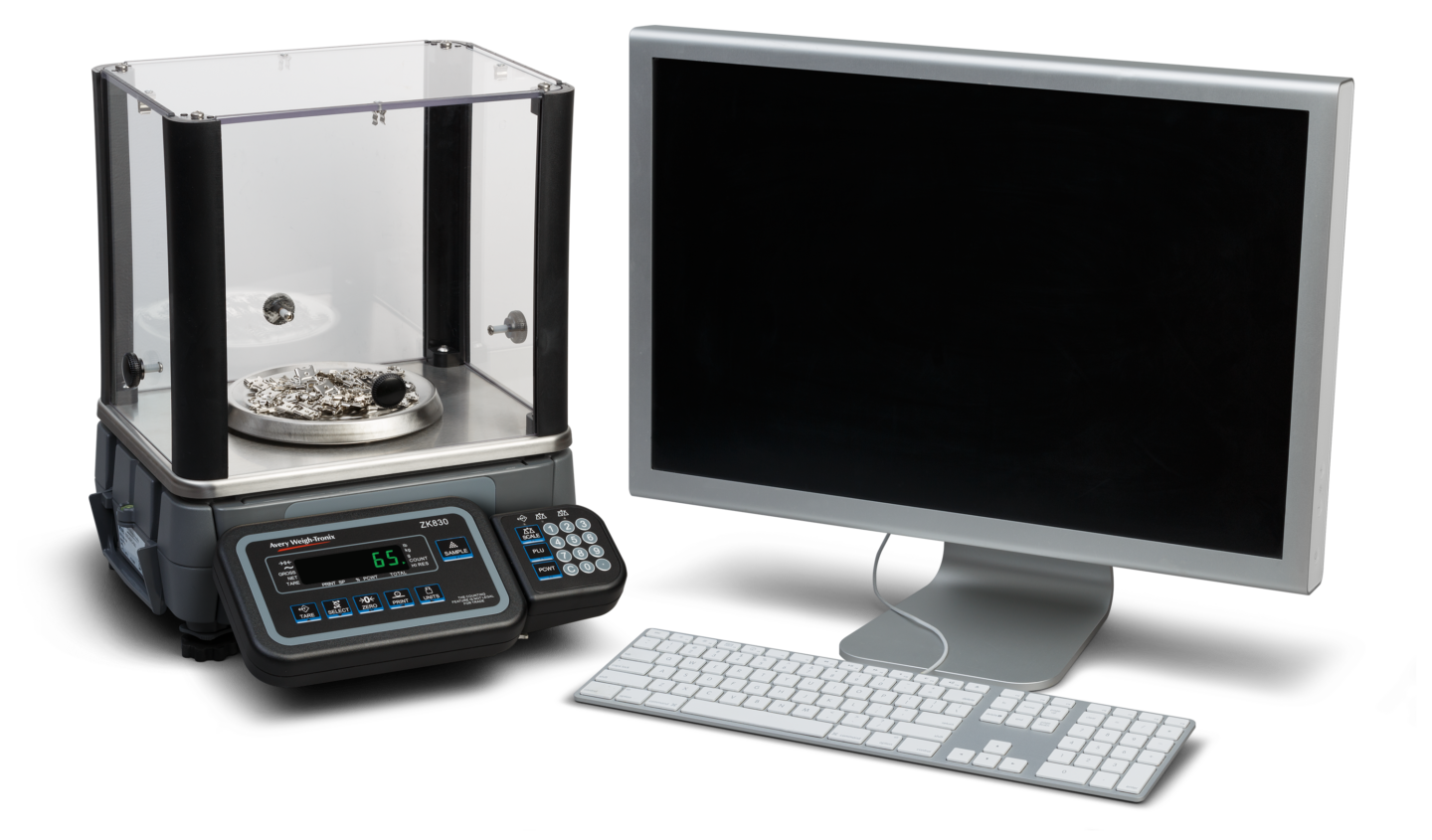
In 2026, a balance with $0.001\text{g}$ ($1\text{mg}$) readability is technically defined as a Precision Balance, though it is often colloquially called a "milligram analytical balance." These units are the "workhorses" of chemistry and pharmaceutical labs, offering a perfect middle ground between high sensitivity and a larger weighing capacity (typically up to $600\text{g}$).
1. Top 2026 Models & Estimated Prices
|
Model |
Readability |
Capacity |
2026 Estimated Price |
Key Advantage |
|
Sartorius Entris II (i) |
$0.001\text{ g}$ |
$320\text{ g} - 620\text{ g}$ |
$1,800 – $2,400 |
isoCAL: Fully automatic internal calibration; ultra-stable. |
|
Mettler Toledo MR203 |
$0.001\text{ g}$ |
$220\text{ g}$ |
$1,400 – $2,100 |
Touchscreen: Modern UI with easy data export to LIMS/Excel. |
|
Ohaus Pioneer PX323 |
$0.001\text{ g}$ |
$320\text{ g}$ |
$1,100 – $1,600 |
Static Removal: Built-in bar to ground charges; cast-metal base. |
|
Vevor Analytical |
$0.001\text{ g}$ |
$500\text{ g}$ |
$150 – $320 |
Budget King: Best for schools or basic QC; external calibration. |
2. Core "Lab Sensitive" Features
- Draft Shield (Required): At $1\text{mg}$ sensitivity, air currents from a person walking past can cause the digits to "dance." Always ensure your model includes a 3-door glass or high-clarity plastic windshield.
- Internal Calibration (InCal): For professional lab work, look for models ending in "i" (e.g., Sartorius BCA323i). These use an internal motor and weight to self-calibrate when they detect room temperature shifts, ensuring the $0.001\text{g}$ remains accurate all day.
- Static Removal Bar: Higher-end models like the Ohaus Pioneer PX include a physical grounding bar. This is vital when weighing fine powders into plastic weigh boats, which often carry static charges that "push" or "pull" on the sensor.
+1
- Fast Stabilization: Modern EMFR (Electromagnetic Force Restoration) sensors can "lock" a reading in 1.0 to 1.5 seconds, whereas budget strain-gauge models may take 5+ seconds.
3. Critical Setup for $1\text{mg}$ Precision
The Warm-Up Rule: To achieve true $0.001\text{g}$ accuracy, the balance must be plugged in and "warmed up" for at least 30 minutes (up to 2 hours for high-end research models) to stabilize the internal electronics.
The Anti-Vibration Requirement: Even if the scale is "sensitive," it won't be accurate on a standard desk. Use a heavy stone anti-vibration table or a granite slab to prevent building vibrations from affecting the reading.
4. 2026 Connectivity Options
- HID (Human Interface Device): Many 2026 balances act as a "USB Keyboard." When you press the "Print" button, the weight is typed directly into your open Excel or Google Sheets cell—no driver software required.
- IoT / Wi-Fi: Professional models now push data logs directly to the cloud or an Electronic Lab Notebook (ELN), creating a timestamped audit trail for regulatory compliance.