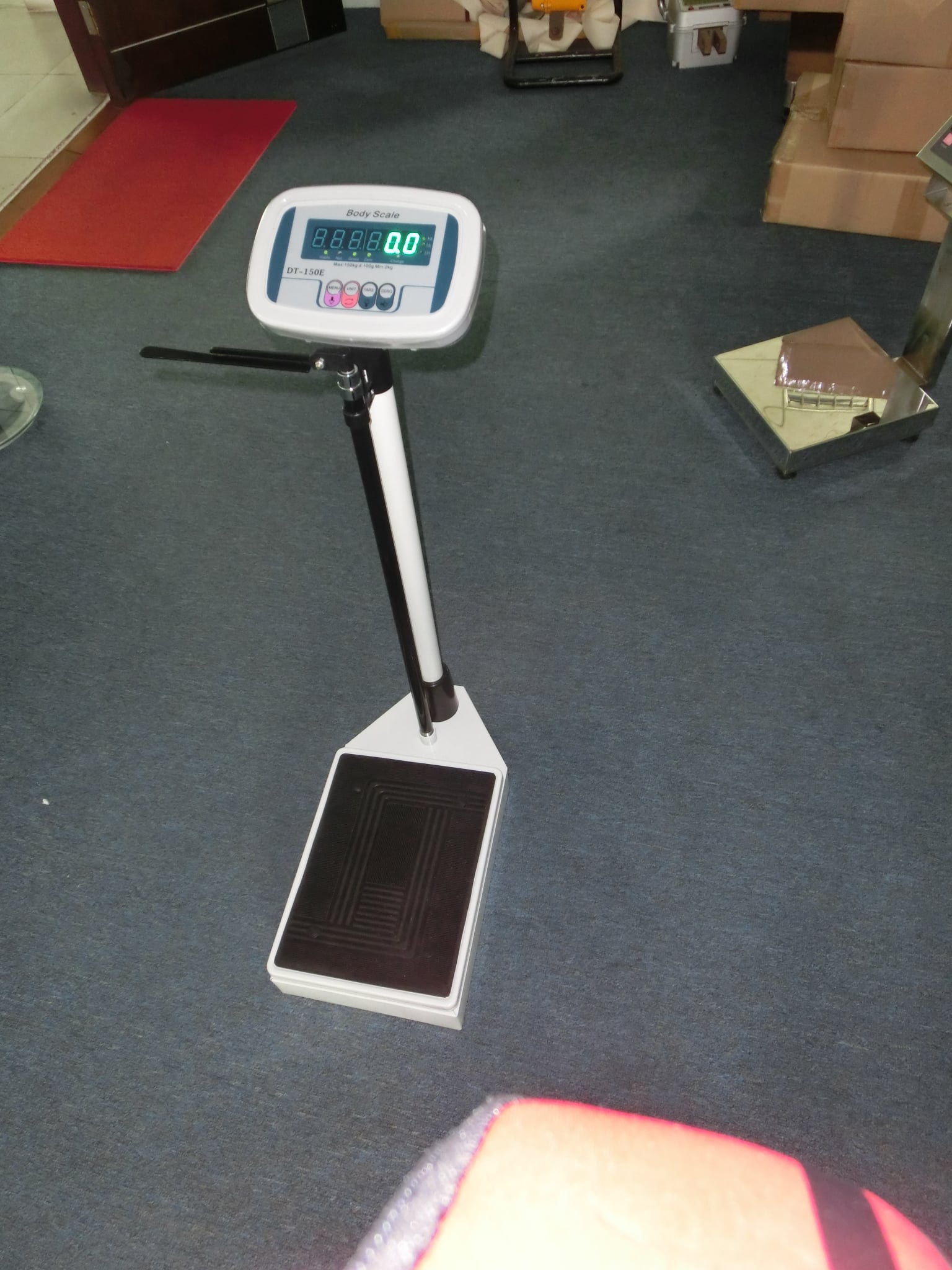
medical-grade electronic scales with height measuring rods (stadiometers) have evolved into "integrated health stations." These devices provide weight, height, and Body Mass Index (BMI) in a single step, often featuring ultrasonic technology for touchless height measurement.
1. Top Recommended Medical Scales (2026)
|
Model |
Weight Capacity |
Height Range |
Precision (W/H) |
Key Feature |
|
Seca 777 |
250 kg (550 lbs) |
10 cm – 230 cm |
100 g / 1 mm |
Ultra-Stable: Tilt-proof base and eye-level display. |
|
Detecto Solo |
250 kg (550 lbs) |
76 cm – 214 cm |
100 g / 1 mm |
Economical: Mechanical height rod with a digital display. |
|
Health O Meter 500KL |
227 kg (500 lbs) |
60 cm – 213 cm |
100 g / 1 mm |
Market Standard: Found in most GPs; 2-minute "hold" time. |
|
Rice Lake 150-10-1 |
250 kg (550 lbs) |
60 cm – 208 cm |
100 g / 1 mm |
Industrial Build: Extremely rugged for high-traffic hospitals. |
2. Key Technical Specifications
- BMI Calculation: Once the height rod is adjusted, the scale automatically divides weight by height squared ($BMI = kg/m^2$) and displays the result instantly.
- Dual Display: Many 2026 models feature a secondary screen or a split-screen LCD so the healthcare provider and patient can see weight and height/BMI simultaneously.
- Connectivity (EMR Ready): Professional scales now come with USB or Bluetooth interfaces as standard to transmit data directly into Electronic Medical Record (EMR) systems, reducing transcription errors.
- Motion Sensing (Damping): For patients who are unsteady or trembling, electronic damping averages the movement to provide a stable, locked reading.
3. Height Measurement Methods
- Mechanical Rod: A manual "sliding" bar that the practitioner pulls up to the patient's head. It is reliable and requires no power.
- Digital Stadiometer: Uses a sensor to track the position of the headpiece, displaying the height digitally on the main screen.
- Ultrasonic (Touchless): The most advanced option for 2026. An ultrasonic sensor on the column bounces sound waves off the patient’s head to calculate height instantly without touching the patient—ideal for hygiene and speed.
4. Professional Features to Look For
Tilt-Proof Base: High-quality clinical scales (like the Seca 777) feature a reinforced metal base that won't tip if a patient steps on the very edge—a common safety issue with cheaper plastic-based models.
Mother/Child Function: Allows a practitioner to weigh a parent first, "zero" the scale, and then weigh the parent holding a child to get the child's weight only.
5. Why Choose Electronic Over Mechanical Beam?
- Speed: BMI calculation is instant; no manual math required.
- Readability: Large backlit LCDs prevent "eye-balling" errors common with sliding weights.
- Higher Capacity: Most digital medical scales handle up to 250–300 kg, whereas manual beams often cap out at 160–180 kg.