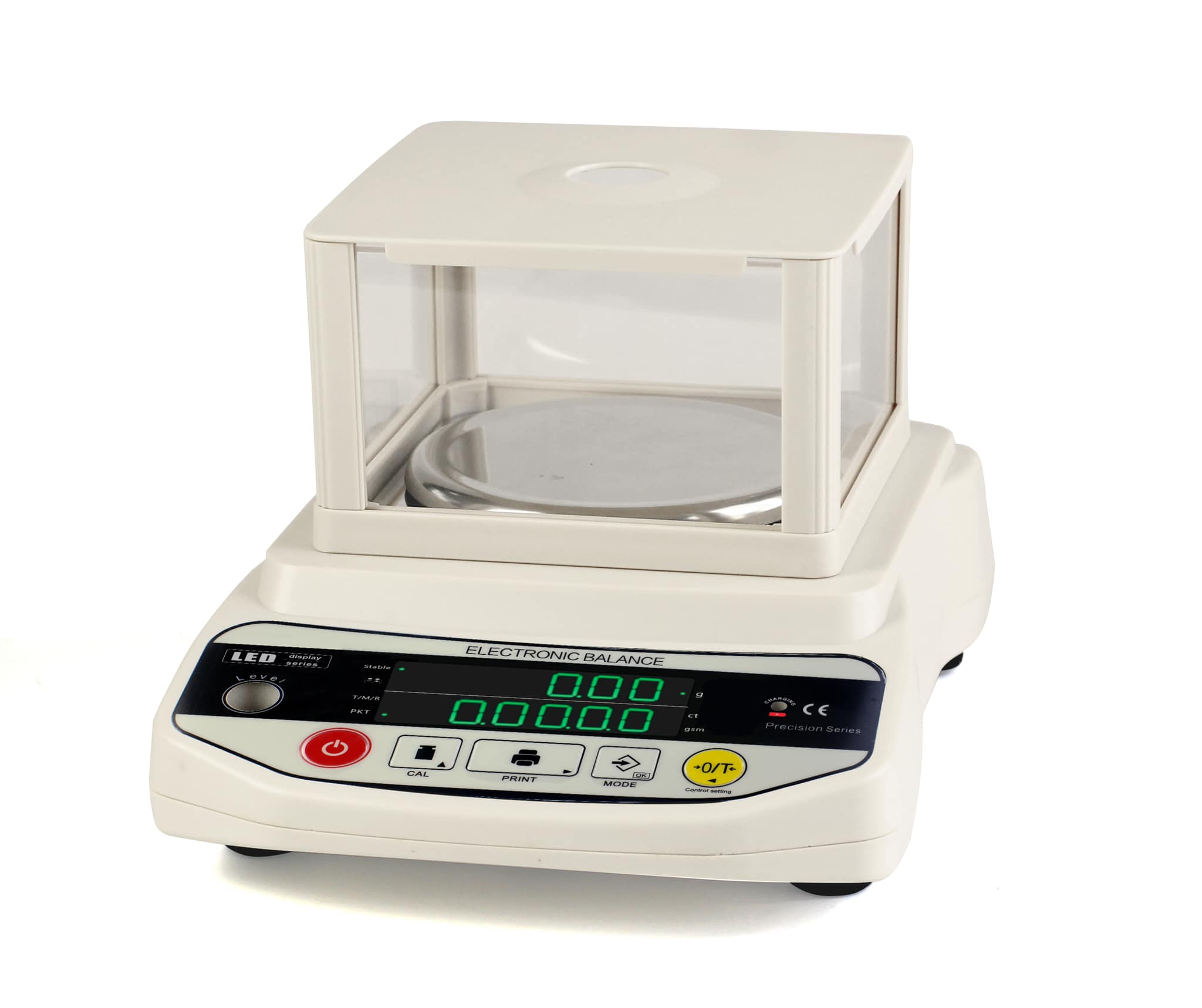
the medical digital analytical balance with an LCD display is a critical instrument for pharmacies, clinical research, and hospital labs. These units must meet strict regulatory standards—primarily USP <41> (effective February 2026) and OIML/NTEP "Legal for Trade" certifications.
1. Top Medical-Grade Models (2026)
|
Model |
Readability |
Display Type |
Best For |
|
Sartorius Cubis II (MCE) |
$0.1\text{ mg}$ |
High-Contrast LCD |
High-end pharmaceutical R&D; fully GxP compliant. |
|
Mettler Toledo MR |
$0.1\text{ mg}$ |
Color TFT LCD |
Clinical labs; features chemical-resistant housing. |
|
Ohaus Pioneer PX |
$0.1\text{ mg}$ |
Dual-Line LCD |
Hospital pharmacies; includes a second line for guidance. |
|
A&D GH-300-EC |
$0.1\text{ mg}$ |
Backlit LCD |
Certified "Legal for Trade" (Class I/II) medical dispensing. |
|
Adam Luna |
$0.1\text{ mg}$ |
Large Digit LCD |
Academic medical labs; easy-to-read 24mm blue digits. |
2. Mandatory Medical Requirements (2026 Standards)
The medical field requires more than just high precision. As of February 2026, the following features are often mandatory for compliance:
- USP <41> Compliance: Balances used for medicines must be calibrated periodically with documented Measurement Uncertainty.
- Internal Calibration (isoCAL/FACT): To prevent errors caused by hospital climate control shifts, the balance must self-calibrate automatically (usually every 4 hours).
- Audit Trails: For 21 CFR Part 11 compliance, the scale must log who weighed what and when, preventing data tampering in patient records or drug formulation.
- Anti-Static Technology: Medical powders are prone to static. Look for models with a built-in ionizer or a StaticDetect LCD warning icon to prevent weight drifting.
3. The "Extra LCD Display" in Medical Settings
In medical environments, an Auxiliary (Remote) LCD Display is often used for:
- Cleanroom Isolation: The balance stays inside a sterile hood while the LCD display is mounted outside at eye level for the technician.
- Patient Transparency: In retail pharmacies (compounding), a customer-facing LCD display is a legal requirement in many jurisdictions to ensure the customer sees the weight being measured.
- PPE Compatibility: Modern LCDs are designed to be "glove-friendly," ensuring they don't lose touch sensitivity when the operator is wearing nitrile or latex medical gloves.
4. Setup and Cleaning
The 70% Rule: Medical-grade analytical balances are built with high-quality ABS or die-cast aluminum, allowing them to be safely disinfected with 70% Ethanol or Isopropanol without fogging the LCD screen or damaging the weighing cell.
Leveling Assistant: Many 2026 models feature an electronic "bubble" on the LCD. In a medical lab, if the scale is bumped and becomes unlevel, the display will turn red or flash a warning to prevent inaccurate dosing.