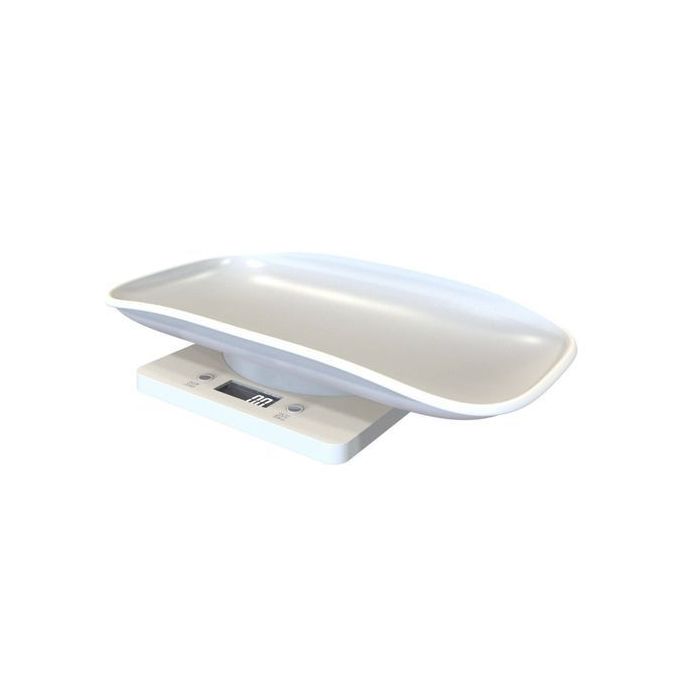
Mechanical Baby Weighing Scales are traditional, battery-free instruments used in clinics, hospitals, and homes. They are favored for their extreme durability, simplicity, and reliability in environments where electricity is unavailable.
Types of Mechanical Baby Scales
1. Beam Balance Scales (Doctor’s Office Style)
These are the "gold standard" for mechanical precision. They use a sliding poise system on a graduated beam to determine weight.
- Mechanism: A lever (beam) is balanced manually by moving weights along a scale until the arm stays level.
- Key Features: Often includes a built-in measuring tape for height and a heavy-duty steel base.
- Best For: Professional pediatric offices and hospitals.
- Example: Seca 725 or Detecto 450.
2. Dial (Spring) Scales
These resemble traditional kitchen or bathroom scales but with a large, ergonomically curved tray.
- Mechanism: The weight of the baby compresses or stretches an internal spring, which moves a needle around a large, easy-to-read dial.
- Key Features: Simple "reset-to-zero" (Tare) knob to account for blankets.
- Best For: Home use or pharmacy check-ups where speed is more important than laboratory precision.
3. Hanging/Suspended Scales
Commonly used by visiting nurses, midwives, and global health organizations (e.g., UNICEF).
- Mechanism: The scale is hung from a tripod or ceiling, and the baby is placed in a "weighing trouser" or sling attached to a bottom hook.
- Key Features: Extremely portable and lightweight; uses a large 6-inch dial.
- Best For: Field clinics, remote research, and mobile health visits.
- Example: Salter 235-6S.
Technical Specifications
Typical specs for professional-grade mechanical units like the Seca 725 or Detecto 450.
|
Feature |
Specification |
|
Max Capacity |
16 kg to 25 kg (35 lbs to 65 lbs) |
|
Graduation (Accuracy) |
5 g to 100 g (depending on model type) |
|
Material |
All-metal (Steel) or High-impact ABS Plastic |
|
Dimensions (Tray) |
Approx. 550 mm x 280 mm (22" x 11") |
|
Functions |
Manual Reset-to-Zero (Tare); No "Hold" function |
|
Power Source |
None (100% Mechanical) |
|
Certification |
Class III (Medical Grade) |
Pros vs. Cons
The Advantages
- Zero Maintenance: No batteries to replace and no electronic components to fail.
- Durability: Built to last for decades; many are scratch-proof and impact-resistant.
- Independence: Works in any climate or remote location regardless of power access.
The Trade-offs
- No "Hold" Function: Unlike digital scales, a mechanical needle will bounce if the baby kicks, making it harder to get an instant reading.
- Readability: You must interpret the needle or the beam position, which can lead to slight human error compared to a digital screen.
- Weight: Beam balance scales are significantly heavier and less portable than modern plastic digital scales.
Maintenance Tip: Even though they have no batteries, mechanical scales should be calibrated annually using certified test weights to ensure the spring or beam hasn't shifted over time.