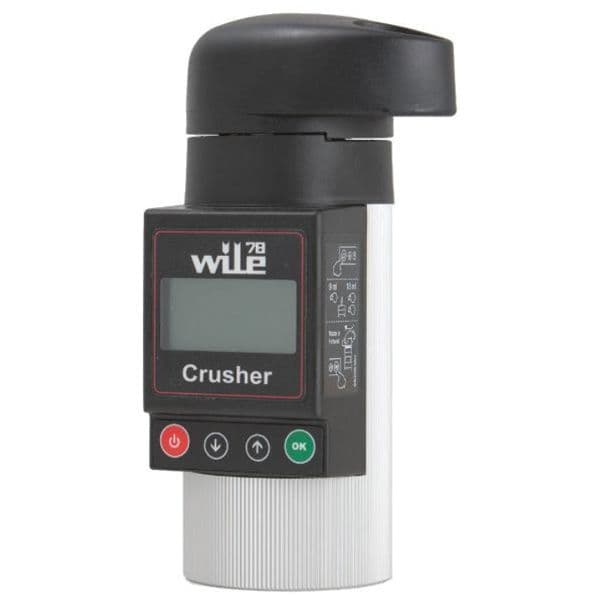
Halogen Moisture Analyzer is the primary "reference-standard" instrument used in laboratories and grain intake offices to replace the slow, traditional oven-drying method. It operates on the Thermogravimetric Principle (Loss on Drying), where a high-precision balance and a halogen lamp work together to determine moisture in minutes.
1. Why Halogen is Preferred for Seeds & Grains
- Speed: While an oven takes 1–3 hours for grains like wheat or corn, a halogen analyzer provides a result in 2–5 minutes.
- Uniformity: The ring-shaped halogen lamp provides more even heating than standard infrared or ceramic heaters, preventing the outer hull of the seed from burning before the internal moisture has evaporated.
- Precision: These units typically offer 0.01% moisture readability, which is essential for determining the "Dry Matter" content for commercial pricing.
2. Top Laboratory Models for Grain (2026)
|
Model |
Capacity/Readability |
Key Feature |
Best For |
|
Mettler Toledo HX204 |
200g / 0.1mg |
Hanging Pan Design: Isolates heat from the balance for peak precision. |
Seed R&D and certified labs. |
|
Ohaus MB120 |
120g / 1mg |
SmartGuide™: Automatically analyzes the grain type and suggests the best temperature. |
Commercial grain elevators. |
|
Sartorius MA160 |
160g / 1mg |
AURI Heating: Better thermal stability for high-volume daily testing. |
Quality Control in food processing. |
|
PCE-MA 110 |
110g / 1mg |
Budget Pro: Reliable performance with RS232/USB for data logging. |
Small-to-medium farm operations. |
3. Recommended Drying Settings (LOD)
For grains and seeds, the drying temperature is critical. If it's too hot, the grain's protein/oil content may degrade; if too low, the core remains wet.
- Corn/Wheat/Barley: 130°C (Standard setting).
- Soybeans & Oilseeds: 105°C (Lower temp to prevent oil oxidation).
- Rice (Paddy): 120°C (To avoid cracking the husk too quickly).
- Shut-off Criterion: Usually set to "A60" (stops when weight loss is less than 1mg in 60 seconds).
4. Step-by-Step Analysis Process
- Sample Prep: For large grains like corn, many labs use a mini-grinder to crush the sample. This increases surface area and ensures the moisture is released faster.
- Taring: Place an aluminum pan in the analyzer and press "Tare."
- Loading: Spread 5g to 10g of the grain evenly across the pan. A thin, flat layer is vital for accuracy.
- Start: Close the lid. The halogen lamp activates, and the screen displays a real-time Drying Curve.
- Result: Once stable, the meter locks the final percentage on the screen and can print a GLP-compliant report.
5. Critical Maintenance for 2026
- Weight Calibration: Every week, use a certified 50g or 100g weight to verify the internal balance.
- Temperature Calibration: Use a specialized temperature adjustment kit (a thermometer that fits in the pan) every 1–3 months to ensure the "130°C" setting is accurate.
- Lamp Cleaning: Dust from grain hulls can coat the halogen bulb. Wipe it with a lint-free cloth once it has cooled to maintain heat intensity.