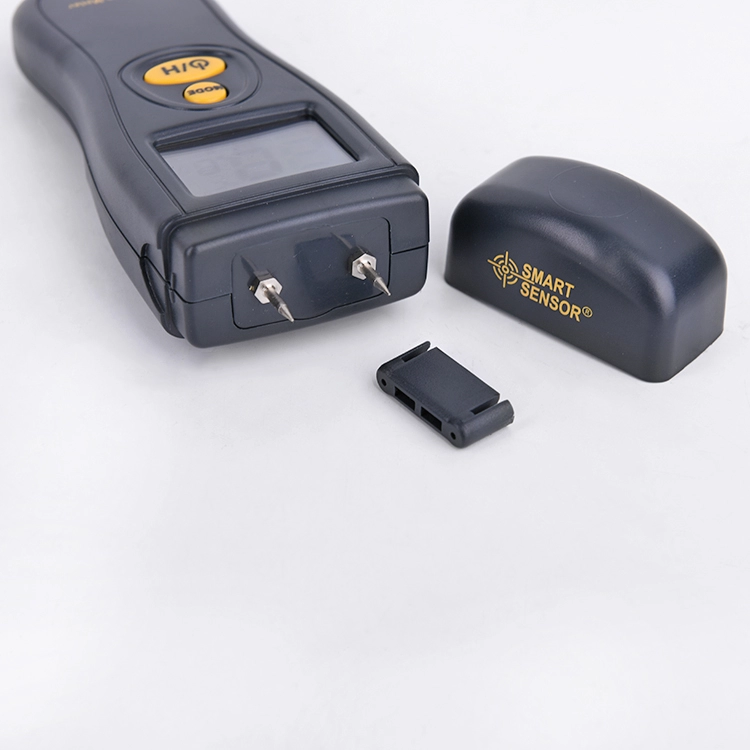
The Grain Moisture Test Meter is a digital instrument designed to quickly and accurately determine the moisture content (water percentage) in a variety of harvested grains, seeds, and legumes. Moisture content is one of the most critical indicators of grain quality — influencing storage safety, weight, milling performance, and resistance to mold or spoilage. This meter is suitable for farmers, grain processors, buyers, and storage managers, offering rapid in‑field and warehouse measurements that help users make better drying, storage, and trading decisions.
Advanced models often incorporate automatic temperature compensation, multi‑grain calibration profiles, and digital displays for precise and repeatable readings in seconds. Some versions also include data storage and connectivity options for analysis and reporting.
📊 Specifications — Measuring Range & Key Performance
|
Specification |
Typical Details |
|
Moisture Measuring Range |
5 % to 30 % water content — common range for crops such as wheat, corn, barley, rice, etc. (calibrated by crop type) |
|
0 % to 50 % (or higher) — extended range seen in advanced meters capable of testing moisture up to high wet conditions (model‑dependent) |
|
|
Resolution |
0.1 % moisture increments on digital display |
|
Accuracy |
Typically ±0.5 % to ±1.0 % moisture content depending on model and calibration |
|
Grain Types Supported |
Many meters support multiple grain species including wheat, corn/maize, rice, barley, soybeans, sorghum, oats, coffee beans, sunflower seeds, and more — with specific ranges for each type |
|
Measuring Time |
Seconds per sample for rapid field or warehouse testing |
|
Display Type |
Digital LCD or LED with clear moisture percentage readout |
|
Temperature Compensation |
Automatic correction based on grain temperature for improved accuracy |
|
Power Supply |
Battery‑powered (e.g., AAA or 9 V depending on model) |
|
Operating Conditions |
Often 0 °C to 50 °C ambient use & typical humidity tolerance |