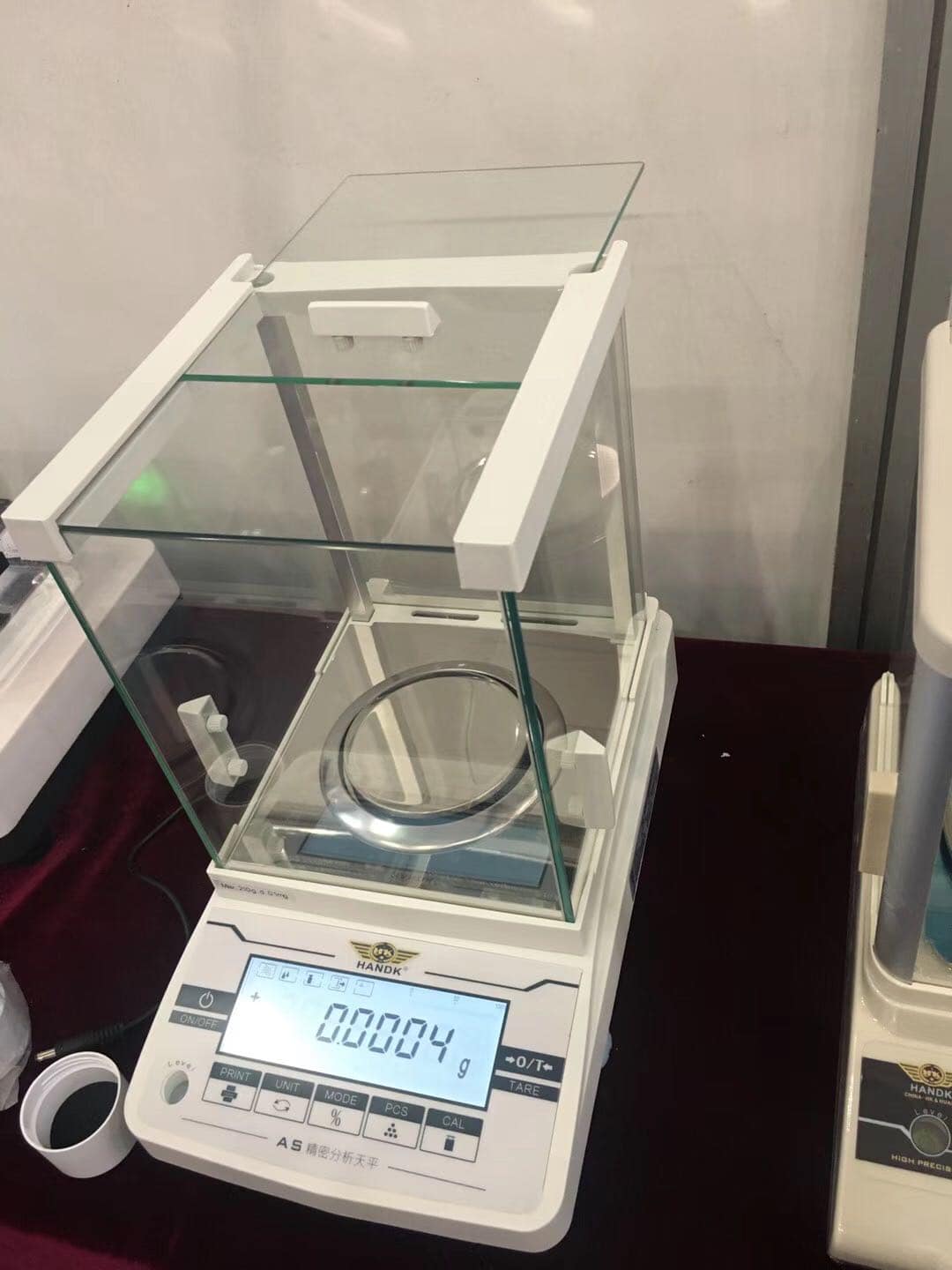
the electronic lab analytical counting scale is a hybrid instrument that combines the ultra-high sensitivity of an analytical balance ($0.0001\text{g}$) with the specialized software used for parts counting.
While industrial counting scales usually handle bolts and screws, an analytical counting scale is designed for minuscule items like micro-electronics, pharmaceutical seeds, or precision watch components.
1. Top Recommended Models for 2026
Most premium analytical balances now include a "Parts Counting" application as a standard software feature.
|
Model |
Count Readability |
Capacity |
2026 Estimated Price |
Best For |
|
Ohaus Pioneer PX |
$0.1\text{ mg}$ |
$120\text{g} – 320\text{g}$ |
$1,100 – $1,600 |
Academic & Entry Lab: Best value for routine counting tasks. |
|
A&D Apollo GX-A |
$0.1\text{ mg}$ |
$220\text{g}$ |
$3,500 – $5,500 |
High Speed: Features "Smart-SHS" for counting thousands of pieces in seconds. |
|
Mettler Toledo MR |
$0.1\text{ mg}$ |
$220\text{g}$ |
$3,800 – $9,500 |
Pharma/QC: Chemical-resistant housing; great for cleanrooms. |
|
Sartorius Cubis II |
$0.01\text{ mg}$ |
Modular |
$10,000 – $25,000+ |
High Tech: Modular counting apps with full data audit trails. |
2. How the Counting Function Works
The balance uses a Piece Weight Entry method to convert mass into a quantity:
- Sampling: You place a known number of items (usually 10, 20, or 50) on the pan.
- Average Piece Weight (APW): The balance divides the total mass by the count to determine the APW.
- Example: If 10 micro-screws weigh $0.1000\text{g}$, the APW is $0.0100\text{g}$.
- Bulk Counting: You pour the rest of the batch onto the pan. The balance instantly calculates:
$$\text{Total Count} = \frac{\text{Total Mass}}{\text{APW}}$$
3. Critical Features for Analytical Counting
- High Internal Resolution: To count extremely light items (under $1\text{mg}$ each), the balance needs an internal resolution of at least 1:1,000,000. Most 2026 analytical balances easily achieve this.
- ACAI (Automatic Counting Accuracy Improvement): Found in A&D models, this feature re-calculates the APW as you add more items to the pan, correcting for slight variations in individual piece weights.
- Draft Shield Necessity: Because you are counting items that weigh almost nothing, the glass draft shield must be closed during the sampling phase. Even a small air current can make the balance think you added an extra piece.
- Connectivity: Modern units feature USB-C or Bluetooth, allowing you to send the total count directly to an inventory management system or a label printer.
4. Professional Setup Tip
The Minimum Sample Rule: For the most accurate count, your initial sample weight should be at least 100 times the balance's readability. On a $0.0001\text{g}$ balance, your initial 10-piece sample should ideally weigh at least $0.0100\text{g}$ to ensure the math doesn't "drift" as you add thousands of pieces.