Choosing the right crane scale is a critical decision for any industry that deals with heavy lifting and precise weight measurement — from manufacturing and construction to logistics and shipping. Two main types dominate the market: digital crane scales and mechanical crane scales. But which one truly delivers better performance, reliability, and value?
Let’s break down the differences to help you make an informed choice.
Understanding the Basics
Mechanical Crane Scales
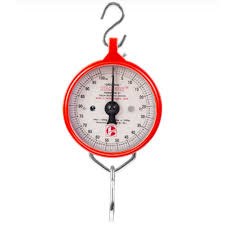
Mechanical crane scales measure weight using springs, levers, or analog mechanisms that move in response to load force. The operator reads the weight from a dial or pointer on the scale — no electronics or power source needed.
Digital Crane Scales
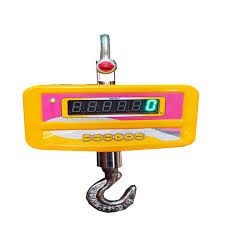
Digital crane scales use electronic load cells to measure force, then convert it into a weight reading displayed on an LED or LCD screen. These often include advanced features such as wireless connectivity, data logging, and remote readouts.
1. Accuracy: A Clear Advantage for Digital
When it comes to precision, digital crane scales typically outperform mechanical ones.
- Mechanical scales tend to offer moderate accuracy and readings that depend on the operator’s interpretation of a moving needle.
- Digital scales use electronic sensors that deliver weight readings with significantly tighter tolerances (often ±0.1 % to ±0.5 % of full scale), plus automatic temperature compensation and signal processing for stability.
⚖️ Winner: Digital — especially in industries where precise measurements are critical.
2. Ease of Use & Readability
Mechanical scales may be simple, but their analog displays can be difficult to read — especially from a distance, in low light, or when the load is in motion.
Digital scales provide:
- Bright, clear numeric displays
- Readouts in multiple units
- Remote viewing options via wireless displays
These features make digital scales easier and safer to use on busy job sites.
👉 Winner: Digital for usability; mechanical only wins if simplicity is your priority.
3. Feature Set: Basic vs. Smart
Mechanical crane scales focus purely on weight display — that’s it. They don’t include advanced functions.
Digital models often offer:
- Tare and zero functions
- Peak hold
- Data logging
- Wireless connectivity and remote monitoring
- Integration with software systems
These features boost efficiency and help with record-keeping and reporting.
📊 Winner: Digital for functionality.
4. Durability & Maintenance
Mechanical scales are rugged and don’t rely on batteries or power, which makes them appealing in remote or power-limited environments. However, their mechanical parts — springs and levers — can wear out over time, affecting accuracy.
Digital scales rely on electronics and batteries, which may require more careful maintenance, but high-quality models are built for long service life and often include protections against dust, water, and vibration.
🛠️ Winner: Tie — mechanical for simplicity and power-free use, digital for durability and modern design.
5. Cost Considerations
Mechanical crane scales generally come with a lower upfront cost, making them attractive for small operations or occasional use.
Digital crane scales cost more initially, but many industries find the enhanced accuracy, safety, and productivity they provide justify the investment — especially in high-volume or critical-measurement applications.
💰 Winner: Mechanical for budget constraints, but digital for long-term value.
6. Best Use Cases
Here’s how the two types typically compare in real-world settings:
🏗️ Mechanical Crane Scales
- Suitable for basic weighing tasks
- Great where power isn’t available
- Simple, rugged environments with low feature needs
🏭 Digital Crane Scales
- Ideal for manufacturing, logistics, and safety-critical operations
- Environments where accuracy and data integration matter
- Facilities that benefit from wireless data and remote monitoring
Final Verdict: Which One Wins?
If your priority is accuracy, ease of use, advanced features, and long-term efficiency, digital crane scales clearly take the lead for most industrial and professional environments.
However, if you need simple, rugged weighing without dependence on power or advanced tools, mechanical crane scales still have a place — particularly in budget-limited or remote scenarios.
In 2026 and beyond, as industries continue to digitize and demand precise, connected workflows, the trend strongly favors digital crane scales as the superior all-around choice.
Summary Comparison
|
Feature |
Mechanical Crane Scales |
Digital Crane Scales |
|
Accuracy |
Moderate |
High |
|
Readability |
Analog dial |
Digital display |
|
Functionality |
Basic |
Advanced |
|
Maintenance |
Mechanical wear |
Battery/electronics care |
|
Best For |
Simple, low-power use |
Precision, integration, safety |