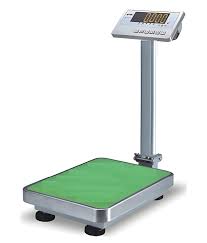
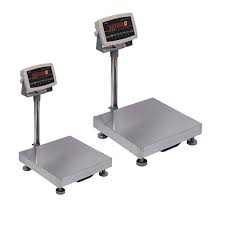
Selecting the right platform scale for your business is more than just choosing the right capacity. When weighing loads between 100 kg and 500 kg, one of the key decisions is whether to go with a digital or analog (mechanical) platform scale. Each has its strengths and ideal use cases — and understanding the differences can save you time, money, and operational headaches.
This guide breaks down the core differences between digital and analog scales and helps you choose the best one for your needs.
What Is an Analog Platform Scale?
Analog scales (also called mechanical scales) use springs and levers to measure weight, translating force into a dial or pointer reading.
Key Characteristics:
- Simple mechanical design
- Dial or pointer display
- No electronic components
How They Work:
As weight is applied to the platform, internal springs compress and move levers that shift a pointer on a scale dial.
What Is a Digital Platform Scale?
Digital scales use load cells and electronic circuitry to measure force and convert it into a digital readout.
Key Characteristics:
- Electronic sensor (load cell) measures weight
- Digital display (LCD/LED)
- Can include advanced features and connectivity
How They Work:
Weight applies pressure to load cells, which generate electrical signals. These signals are processed and shown as precise digital values.
Digital vs Analog: Side‑by‑Side Comparison
1. Accuracy and Precision
🔹 Digital Scales:
- Typically more accurate and consistent
- Can offer very fine readability (e.g., 50 g increments)
- Less prone to drift over time
🔹 Analog Scales:
- Accuracy depends on mechanical calibration
- Readability limited by dial resolution
- May lose precision due to wear or shock
Winner: Digital — if your operations depend on reliable, repeatable measurements.
2. Ease of Use
🔹 Digital Scales:
- Easy‑to‑read numeric display
- Zero and tare buttons simplify net weight measurements
- Often includes unit conversion (kg/lb)
🔹 Analog Scales:
- Requires reading a dial or pointer
- Tare is manual and less intuitive
Winner: Digital — clearer, faster, and more user‑friendly.
3. Durability and Environmental Resistance
🔹 Digital Scales:
- Sensitive electronics can be affected by moisture, dust, vibration
- Many industrial models include sealed load cells and rugged housings
🔹 Analog Scales:
- Simple mechanics can be very rugged
- Less affected by power issues or electrical interference
- Fewer electronic parts to fail
Winner: Analog — in extremely harsh, dirty, or wet environments without protective digital models.
4. Features and Functionality
🔹 Digital Scales:
- Tare and zero functions
- Counting mode
- Data connectivity (USB/RS232/Bluetooth)
- Printer support
- Integration with inventory systems
🔹 Analog Scales:
- Basic weigh‑only function
- Limited or no electronic features
Winner: Digital — hands down, thanks to automation and integration.
5. Calibration and Maintenance
🔹 Digital Scales:
- May require periodic calibration with standard weights
- Diagnostics often easier due to electronic readouts
🔹 Analog Scales:
- Calibration is manual and depends on mechanical adjustment
- May need spring tension adjustments over time
Winner: Digital, for predictable calibration and less frequent adjustment.
6. Cost Considerations
🔹 Analog Scales:
- Typically lower upfront cost
- Fewer parts, simpler construction
🔹 Digital Scales:
- Higher initial investment
- Lower long‑term operational costs through improved accuracy and features
Winner: Analog — if initial budget is tight and basic weighing suffices.
When to Choose Digital
Choose a digital 100–500 kg platform scale if you need:
✅ Precise, repeatable readings
✅ Fast and accurate tare/zero capability
✅ Counting, data logging, or connectivity
✅ Integration with software (ERP, WMS)
✅ Clear digital display for busy operations
Ideal for: Warehouses, manufacturing, logistics, food/chemical processing, inventory control.
When to Choose Analog
An analog platform scale may be right if:
✔ Your weighing needs are basic
✔ You work in extremely rough environments (mud, moisture, heavy dust)
✔ You want simple mechanics with minimal electronics
✔ Budget constraints are tight
Ideal for: Construction sites, small workshops, basic material handling where advanced features aren’t needed.
Final Tips for Choosing Between Digital and Analog
✔ Assess Accuracy Needs
High‑precision workflows (e.g., batching, product labeling, compliance) almost always benefit from digital.
✔ Consider Your Environment
Digital models with sealed electronics compete well even in tough environments. But purely mechanical designs can be simpler to maintain where conditions are extreme.
✔ Think About Integration
If you plan to connect the scale to systems, printers, or software, digital is the clear choice.
✔ Budget for Total Value
A slightly higher upfront cost for a digital scale can deliver long‑term savings through fewer errors, faster workflows, and better automation.
Conclusion
Both digital and analog 100–500 kg platform scales have their place — but for most modern commercial and industrial applications, digital scales deliver superior accuracy, usability, and functionality. Analog scales still serve well in straightforward or extremely rugged contexts.
By understanding the strengths and limitations of each, you can choose a platform scale that best fits your workflow, environment, and budget — ensuring reliable weighing and smoother operations every day.