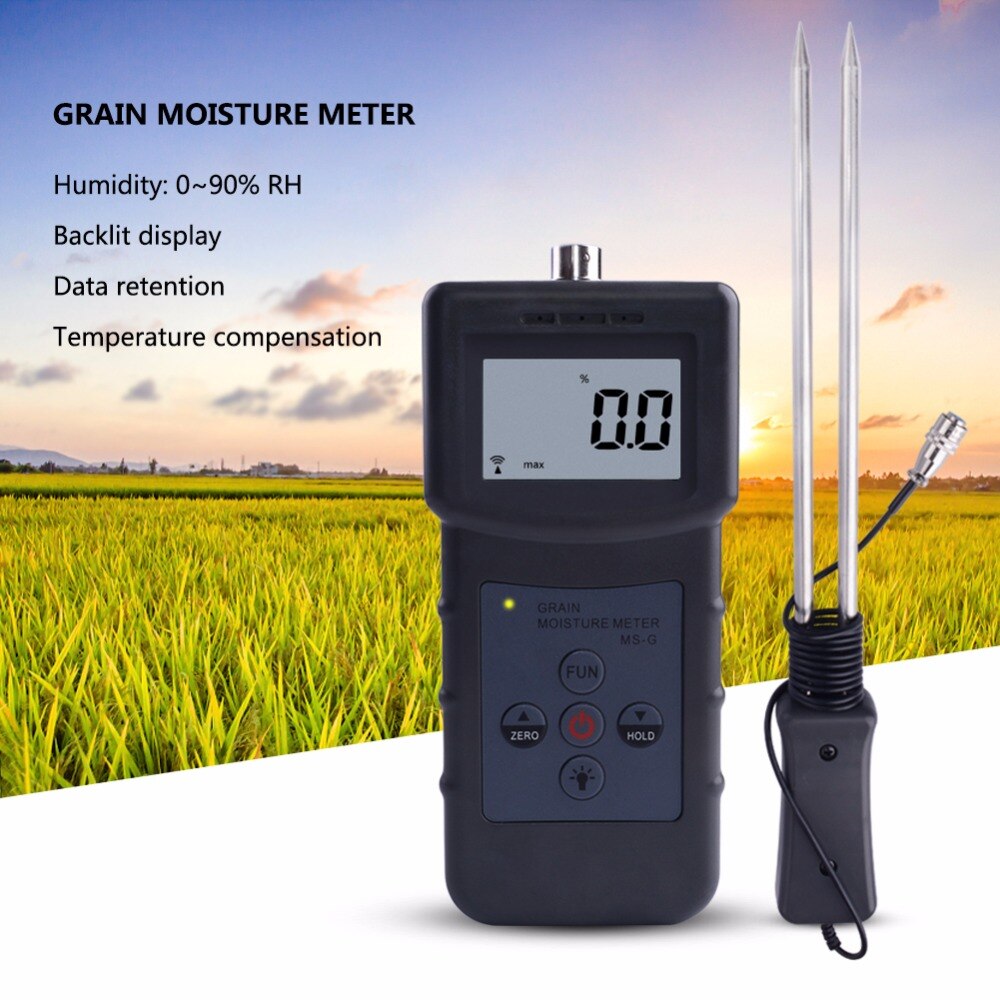
Digital Rice Grain Moisture Meter market is split between rugged field tools for farmers and high-precision analyzers for rice millers. Because rice can be tested in multiple states (Paddy, Brown, or Milled), the best meters now feature specific "Rice Modes" to account for the different starch and husk structures.
1. Top Recommended Rice Moisture Meters (2026)
|
Model |
Type |
Accuracy |
Key Feature |
|
Kett Riceter fv211 |
Whole Grain |
±0.5% |
The Gold Standard: Used globally for paddy and polished rice. Compact and very durable. |
|
Draminski GMDM2 |
Whole Grain + Scale |
±0.1% |
Smart Data: Measures test weight and moisture. Bluetooth connects to your phone for record-keeping. |
|
AgraTronix MT-PRO+ |
Whole Grain |
±0.5% |
Multigrain: Includes 40+ calibrations; excellent for farms growing rice and other crops. |
|
SKZ111B-2 |
Whole Grain |
±0.5% |
Wide Range: Measures moisture from 5% to 35%, ideal for high-moisture early harvest. |
|
LDS-1G |
Cup-Type |
±0.5% |
Volume-Based: Uses a standard cup size to ensure consistency across different rice varieties. |
2. Essential Features for Rice Testing
- Rice State Selection: Ensure your meter can switch between Paddy (Rough Rice), Brown Rice, and Polished (Milled) Rice. Testing paddy on a milled rice setting can cause an error of 2% to 4%.
- Automatic Temperature Compensation (ATC): Rice is often harvested in high heat. ATC adjusts the reading so that a "hot" grain sample doesn't appear wetter than it actually is.
- Non-Destructive Testing: Most modern digital meters are "Whole Grain," meaning you don't have to grind the rice. This is faster and avoids the mess of cleaning a grinder between samples.
- Large Backlit LCD: In 2026, a high-quality meter should have a screen visible in direct sunlight or dark warehouses, showing the grain type and percentage clearly.
3. Critical Moisture Ranges for Rice
- Harvest (Paddy): 20% – 25%. Harvesting at this range prevents "shattering" in the field.
- Commercial Drying: Target 14%. This is the standard for trade and safe storage.
- Milling Ideal: 12% – 13%. If rice is too dry (below 12%), it will break during the milling process, reducing the "Head Rice Recovery" (and your profit).
- Long-Term Storage: 12% or lower is required to prevent mold and "Yellowing."
4. Smart Connectivity (The 2026 Edge)
Advanced meters like the Draminski GMDM2 or Smart-G GMM allow you to:
- Sync to the Cloud: Upload your harvest moisture levels to track which fields are drying fastest.
- Digital Receipts: Provide a time-stamped, GPS-tagged moisture report to a buyer to avoid disputes at the mill.
- Firmware Updates: Download new calibration profiles for specialized rice varieties (like Basmati, Jasmine, or Black Rice) directly via USB or Bluetooth.
5. Proper Sampling Technique
To ensure the digital meter is accurate:
- Sample from the Middle: Don't take rice from the top of the truck or bag; surface grain is often drier due to air exposure. Use a grain probe to get a sample from the center.
- Remove Trash: Stones, straw, or "empty" husks will skew the electrical reading. Ensure your sample is clean before placing it in the meter.
- Repeat 3 Times: Digital sensors can be affected by "random voids" between grains. Always test three times and use the Average function on your meter.