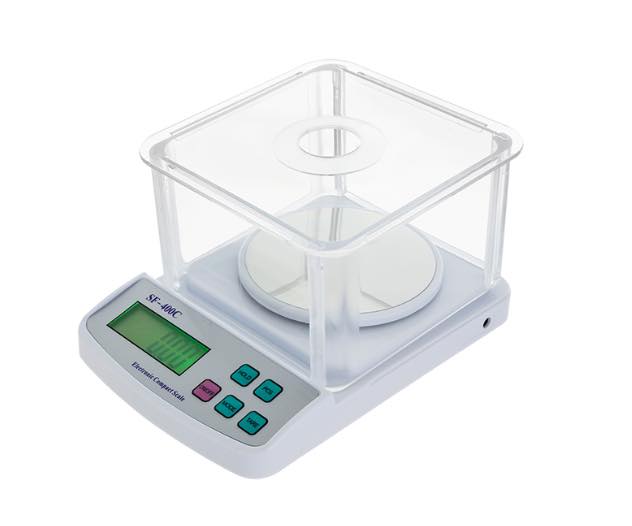
digital analytical balance is determined by its readability (typically $0.1\text{ mg}$ or $0.0001\text{ g}$), calibration type (internal vs. external), and digital features (IoT, touchscreen, or compliance software).
While entry-level models start around $1,000, high-end pharmaceutical-grade stations can exceed $25,000.
1. 2026 Price Comparison by Tier
|
Category |
Typical Price Range |
Top 2026 Models |
Best For |
|
Budget / Academic |
$1,000 – $3,800 |
Ohaus Pioneer PX, Adam Solis |
General chemistry, universities. |
|
Mid-Range Workhorse |
$3,800 – $9,500 |
Mettler Toledo MR, Sartorius Quintix Pro |
R&D labs, high-throughput testing. |
|
Environmental Resilience |
$3,500 – $6,000 |
A&D Apollo GX-AE |
Handling powders or static-heavy samples. |
|
Pharma / High-End |
$10,000 – $25,000+ |
Sartorius Cubis II, Mettler Toledo XPR |
21 CFR Part 11 compliance, micro-weighing. |
2. Market Leader Highlights (2026)
- Mettler Toledo MR Series ($3,800 – $9,500): Often cited as the 2026 "workhorse." It features a color touchscreen and FACT (Fully Automatic Calibration Technology) that triggers based on temperature changes.
- Sartorius Quintix Pro ($4,500 – $7,500): Known for its automatic motorized leveling, which removes user error. If the balance is tilted, it re-levels itself—a feature that used to be exclusive to $20k units.
+1
- A&D Apollo GX-AE ($3,500 – $6,000): The choice for chemistry labs dealing with fine powders. It includes a built-in fanless ionizer that neutralizes static charge in under one second, preventing the "jumping digits" often seen with plastic containers.
- Ohaus Pioneer PX ($1,000 – $3,800): A favorite for university chemistry labs. It offers a reliable cast-metal base and a second line on the display for additional info (like Tare weight) without the high cost of a graphic touchscreen.
3. Critical Price Drivers in 2026
Internal vs. External Calibration: Balances with "External Calibration" are cheaper up-front but require you to buy certified $200\text{ g}$ weights ($500+$ USD) and perform the task manually. In 2026, most labs opt for Internal Calibration ($1,000+$ value) which runs automatically at scheduled times.
Static Control: If you are weighing into plastic weigh boats, an analytical balance without a built-in ionizer will often have a $2\text{ mg}–5\text{ mg}$ error. Adding an external ionizer later costs roughly $800, while built-in versions add roughly $1,500 to the balance price.
4. Hidden Costs
- Anti-Vibration Tables: To achieve $0.1\text{ mg}$ precision, you need a stone-top table, which ranges from $800 to $1,500.
- Software Licensing: For regulated labs, enabling "User Management" or "Audit Trails" (compliance for FDA/EU rules) can be an additional $1,000 – $3,000 software module.