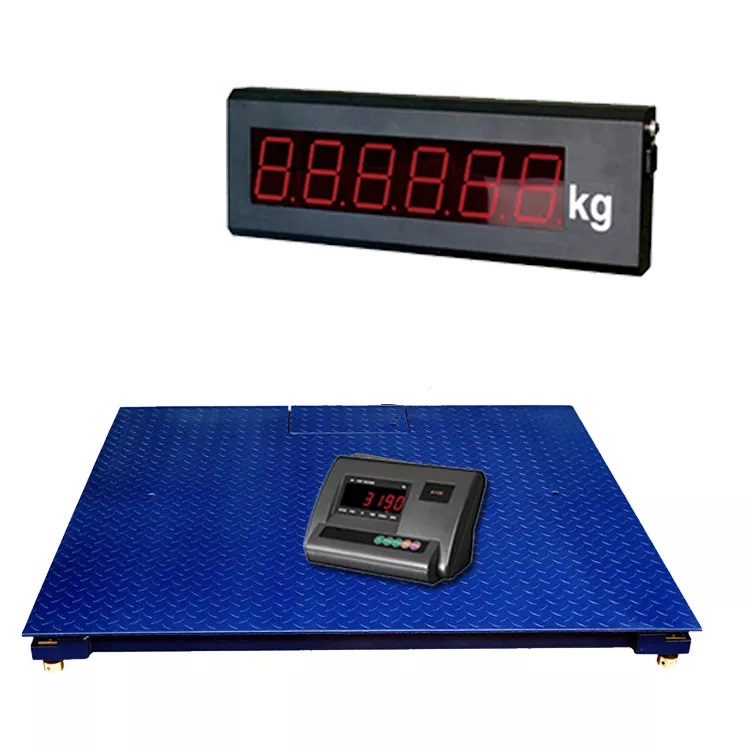
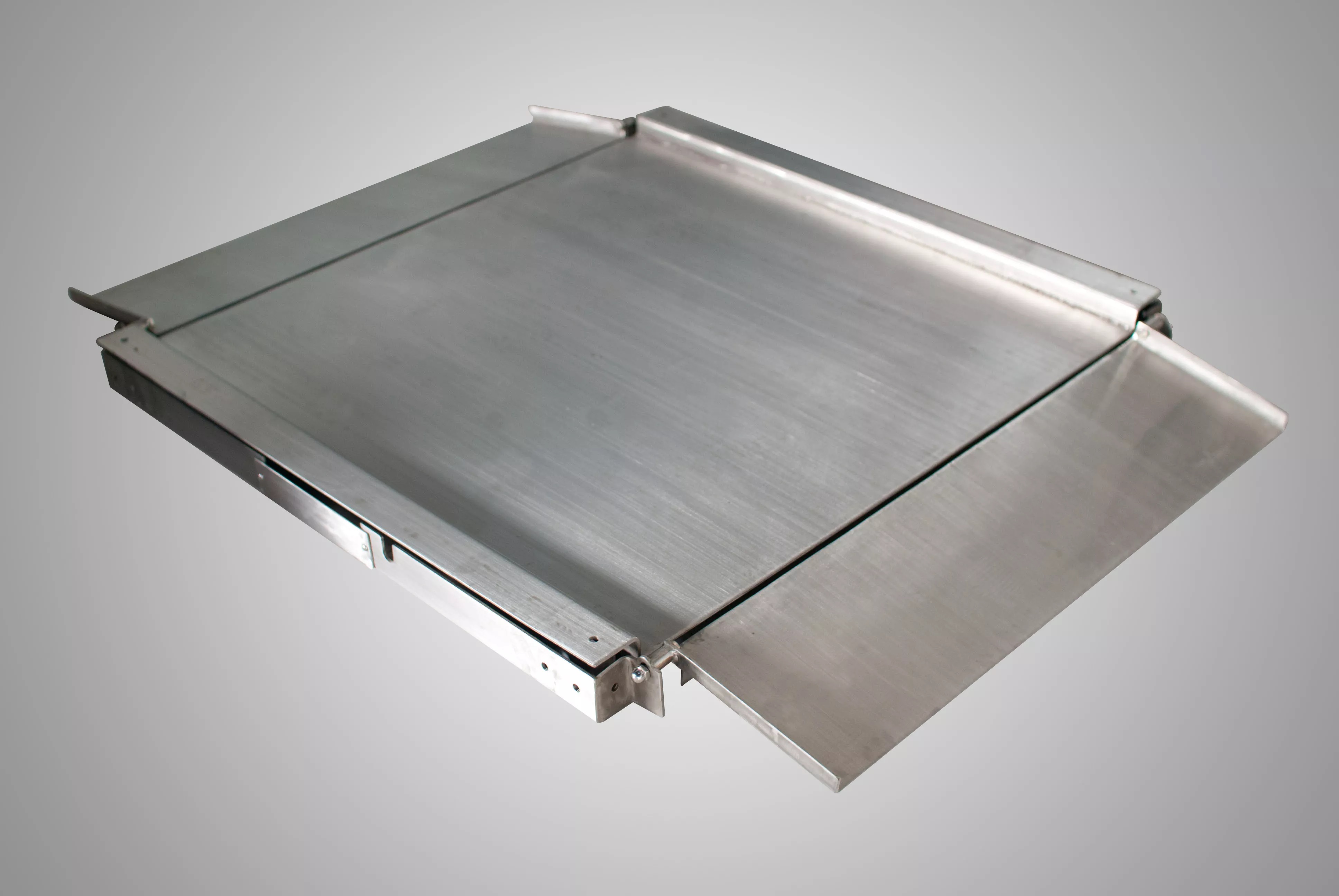
the distinction between commercial and industrial floor scales is less about the "scale" of the object and more about its legal application and structural durability.
1. Commercial vs. Industrial: Key Differences
While they may look similar, they serve fundamentally different business functions.
|
Feature |
Commercial (Legal-for-Trade) |
Industrial (Process-Grade) |
|
Primary Goal |
Transactional Fairness (Selling) |
Operational Efficiency (Processing) |
|
Certification |
NTEP / OIML (Class III) Mandatory |
Optional (usually for internal QC) |
|
Common Use |
Retail, Logistics (Freight), Butchery |
Manufacturing, Batching, Waste |
|
Precision |
Finer increments (e.g., 20g on small loads) |
Consistent bulk results (e.g., 200g–500g) |
|
Design |
Often user-friendly with price computing |
Rugged, built for impact & high traffic |
2. Commercial Floor Scales (Legal-for-Trade)
These are legally required if you are charging a customer based on the weight displayed.
- Applications: Freight & logistics billing, scrap metal yards (buying by weight), and chemical/food packaging for resale.
- Requirements: Must have a sealed indicator and an official stamp or certificate. If the seal is broken or the calibration drifts, the scale cannot be used for trade.
- Top 2026 Models: * Ohaus Defender 3000 (NTEP): A stainless steel favorite for washdown environments.
- Rice Lake RoughDeck (Legal-for-Trade Edition): Known for holding its trade-calibration even under extreme physical stress.
3. Industrial Floor Scales (Process & Heavy Duty)
These are the "workhorses" of the factory floor, designed for internal workflows.
- Applications: * Batching & Recipe Management: Ensuring the correct amount of raw materials go into a mixer.
- Inventory Control: Weighing bins to track stock levels.
- Safety: Preventing truck or forklift overloading.
- Protection (IP Ratings): * IP67/IP68: Standard for dirty environments (dust/moisture).
- IP69K: High-pressure steam cleaning (mandatory for food/pharma).
- Advanced Features (2026): Many now include IIoT (Industrial Internet of Things) modules to push data directly to your ERP (SAP/Oracle) via 5G or Wi-Fi.
4. Typical 2026 Specifications (1t to 5t)
Most professional floor scales in 2026 adhere to these standard builds:
- Material: Checkered mild steel (powder-coated) or 304/316 Stainless Steel.
- Load Cells: 4-Cell Shear Beam systems for "corner-loading" accuracy (the scale stays accurate even if the load isn't perfectly centered).
- Connectivity: Standard RS-232 (for printers) plus modern Bluetooth or Ethernet/IP for automated lines.
- Dimensions: Most commonly 1.2m x 1.2m (Standard Pallet) or 1.5m x 1.5m.
5. Summary: Which one do you need?
- "I am selling goods to a customer based on this weight." → You need a Commercial (Legal-for-Trade) scale.
- "I am weighing items for my own internal records or batching." → A high-quality Industrial Floor Scale is more cost-effective and rugged.