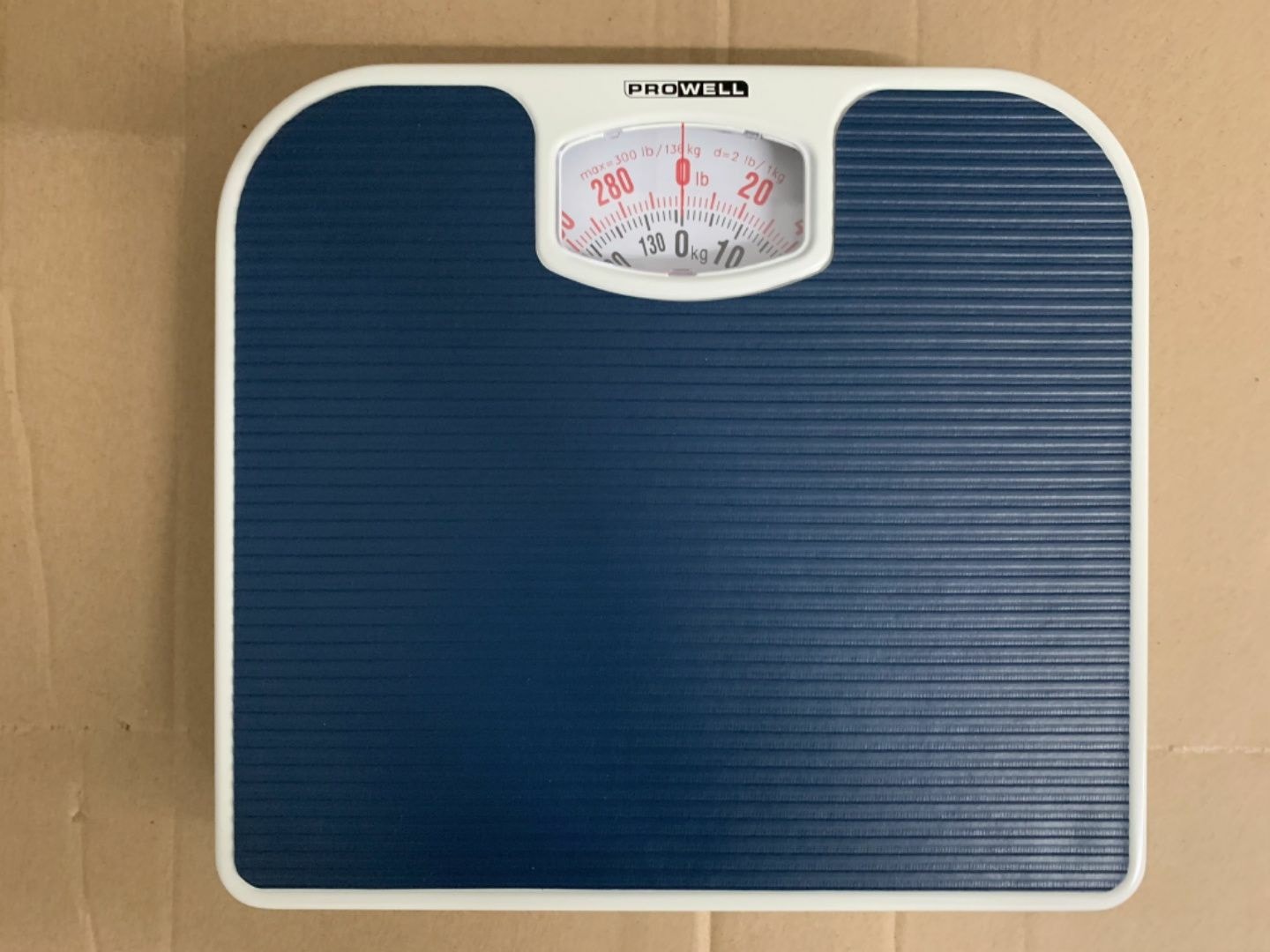
Dial Scales (also known as Mechanical Class III scales) are the gold standard for clinical environments and home users who prioritize long-term reliability and professional-grade accuracy over smart features.
Unlike standard "Doctor-style" consumer scales, certified medical scales are built with heavy-duty internal levers and reinforced springs designed to remain accurate through thousands of weigh-ins without losing tension.
1. Top Rated Medical Dial Scales (2026)
|
Model |
Capacity |
Graduation |
Key Highlight |
|
KERN MGC 150K |
150 kg |
1.0 kg |
Medical Class III: Approved for professional clinical use in the EU. |
|
Salter Academy 100 |
150 kg |
0.5 kg |
Professional Grade: Giant dial with a non-slip, oversized platform. |
|
Seca 762 |
150 kg |
0.5 kg |
The Industry Icon: Frictionless movement with a chrome-plated protection ring. |
|
Detecto 11S |
160 kg |
0.5 kg |
American Classic: All-steel construction with a massive 7" dial face. |
2. What Makes a Dial Scale "Medical Certified"?
To be truly "Medical Grade" (often designated as Class III or NTEP Certified), a scale must meet strict engineering standards:
- Repeatability: If you step on the scale 10 times in a row, the needle must return to the exact same position every time.
- Durability: The internal spring is typically made of high-carbon steel that has been "pre-stressed" to prevent it from stretching or sagging over years of use.
- Precision Dampening: Medical scales have internal shock absorbers that prevent the needle from "bouncing" excessively, allowing it to settle on a weight in under 3 seconds.
- Zeroing (Tare): Features a high-precision thumbwheel that "locks" the needle to zero more firmly than budget models.
3. Core Features & "Ironware" Design
- Oversized Platforms: Designed to accommodate patients with mobility issues, these scales feature wide bases (up to 35 x 45 cm) for maximum stability.
- Giant Dials: Numbers are printed in high-contrast black on white (or vice-versa) with a high-visibility red pointer, making it readable for those with limited vision.
- No Batteries: The most significant advantage—these scales are powered entirely by physics. They are eco-friendly and always ready for use.
- Powder-Coated Steel: The body is usually made of heavy-gauge steel rather than plastic, making it resistant to impacts and easy to sanitize with medical-grade cleaners.
4. Maintenance for Certified Accuracy
The "Calibration Check": Even a medical-grade scale can shift during shipping or if it is bumped.
- Check the dial before stepping on.
- Use the Zero-Adjustment Knob to align the needle exactly on the center of the "0" line.
- Perform a "pre-stretch": Step on the scale once, step off, and check if it returned to zero before your official weigh-in.
5. Is a Dial Scale More Accurate Than Digital?
- Digital: Provides high precision (e.g., $82.45 \text{ kg}$). It tells you exactly how much you weigh right now.
- Dial: Provides high reliability. While you may only be able to read to the nearest $0.5 \text{ kg}$, the mechanical mechanism is less likely to "glitch" or suffer from sensor drift over time.