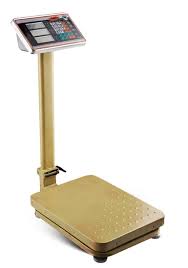
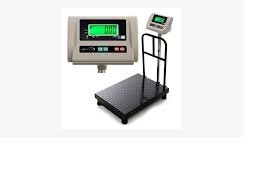
Choosing the right platform scale for commercial or industrial applications isn’t just about picking the one with the highest capacity. Whether you’re outfitting a warehouse, factory, logistics hub, food processing line, or recycling facility, selecting a scale that fits your workload, environment, accuracy needs, and integration requirements can dramatically improve productivity, safety, and cost control.
This guide breaks down everything you should consider before buying a 100–500 kg platform scale so you can make an informed investment.
1. Understand Your Weighing Needs
Before looking at specific models, clarify what you’ll be weighing:
Capacity Requirements
Platform scales in the 100–500 kg range cover a wide range of loads but it’s important to match capacity to your actual use:
- 100–200 kg: Ideal for smaller pallets, cartons, components, and packaged goods.
- 200–400 kg: Handles multi-box loads, medium pallets, and production batches.
- 400–500 kg: Suited for heavier pallets, machinery parts, and industrial containers.
Pro Tip: Choose a scale with a capacity slightly above your heaviest expected load to avoid overloading and extend the scale’s lifespan.
2. Focus on Accuracy and Readability
Accurate measurement is one of the main reasons businesses invest in platform scales.
Accuracy
- Essential for invoicing, regulatory compliance, inventory control, ingredient batching, and quality assurance.
- Industries like pharmaceuticals, chemicals, and food processing often require higher precision.
Readability
- This refers to the smallest weight increment the scale can display (e.g., 50 g, 100 g, 200 g).
- For lighter items or applications requiring fine granularity, higher readability (smaller increment) is better.
Buyers Tip: Align accuracy and readability with how measurements are used. Too much precision can add unnecessary cost; too little precision can cause errors.
3. Evaluate Platform Size and Form Factor
The physical footprint and design of the scale matter for workflow and safety.
Platform Dimensions
- Compact Platforms: Fit confined areas and handle smaller loads.
- Large Platforms: Better for full pallets, crates, and large bulk items.
- Measure your handling equipment (forklift forks, hand trucks, pallet jacks) to ensure compatibility.
Profile Design
- Low-Profile Scales make it easier to load heavy loads manually or with equipment without lifting.
- Raised Platforms might require ramps but can be easier for operators to see/read and integrate with conveyors.
4. Check Construction Quality and Durability
Scales in commercial and industrial settings go through demanding use. Build quality directly affects reliability and total cost of ownership.
Materials
- Stainless steel platforms: Ideal for wet, dusty, or corrosive environments (e.g., food processing, agriculture).
- Powder-coated steel: Cost-effective and durable for general industrial use.
Structural Strength
- Reinforced frames and robust load cells resist bending or warping under heavy, repeated loads.
- Scales designed for industrial environments will often have shock protection, dust seals, and moisture resistance.
Note: A more rugged scale may cost more upfront but save costs on maintenance and downtime.
5. Look for Useful Operational Features
Modern platform scales come with a range of features that improve efficiency:
Standard and Advanced Features
- Tare Function: Subtracts container or pallet weight to measure net weight.
- Counting Mode: Useful for batch counting of items by average weight.
- Units Conversion: Display in kg, lb, or other units based on needs.
- Display Options: Backlit LCD/LED displays help reading in low-light conditions.
Connectivity & Integration
- USB, RS232, Ethernet, or Bluetooth: For connecting to computers, printers, or industrial systems.
- Software Compatibility: Direct integration with ERP, WMS (warehouse management software), or inventory systems automates data logging and eliminates manual entry errors.
- Printer Support: Generate labels or documentation on the fly for shipping and compliance.
6. Consider Environmental and Safety Factors
Where the scale will be used influences the type you should choose.
Work Environment
- Indoor Warehouse: Standard industrial scales may suffice.
- Food/Pharma: Sanitary, washdown-capable designs (e.g., stainless steel, sealed electronics) are critical.
- Outdoor Operations: Weather-resistant designs help prevent corrosion and electrical damage.
Safety
- Slip-resistant surfaces reduce the risk of accidents when handling heavy goods.
- Correct capacity rating helps prevent overloading and equipment damage.
- Consider ramps or low-profile designs to eliminate lifting hazards.
7. Warranty, Support, and Calibration
Good after‑purchase support is important for long-term reliability:
Warranty and Support
- A longer warranty period often reflects confidence in product durability.
- Check availability of local service and parts, especially in commercial/industrial environments where downtime is costly.
Calibration and Certification
- Look for scales that can be calibrated on site (or come pre-calibrated).
- Certification (e.g., OIML, NTEP) may be required for trade or legal-for-trade uses where weights are used for commercial transactions.
8. Budget and Total Cost of Ownership
Don’t just compare initial prices — think long term.
Upfront Cost vs. Value
- Basic models are less expensive but may lack connectivity or durability required for industrial settings.
- Premium models with advanced features can boost operational efficiency and reduce labor costs.
Ongoing Costs
- Calibration Fees
- Maintenance
- Replacement Parts
- Downtime Costs (when scales break or malfunction)
Understanding these costs helps you pick a scale that balances performance and budget.
9. Making the Final Decision
When comparing options, create a checklist that includes:
✔ Capacity and safety margin
✔ Required accuracy and readability
✔ Platform size and transport compatibility
✔ Environment‑ready construction
✔ Connectivity and integration features
✔ Warranty, service, and calibration support
Scales that meet your functional requirements and integrate well into your workflows deliver the greatest long‑term value.
Conclusion
Choosing the right 100–500 kg platform scale is a strategic decision that affects productivity, compliance, and operational cost across warehouse, industrial, and commercial environments. By understanding your weighing needs, prioritizing accuracy and durability, and selecting features that align with your workflow, you can invest in a scale that supports your business effectively and reliably for years to come.