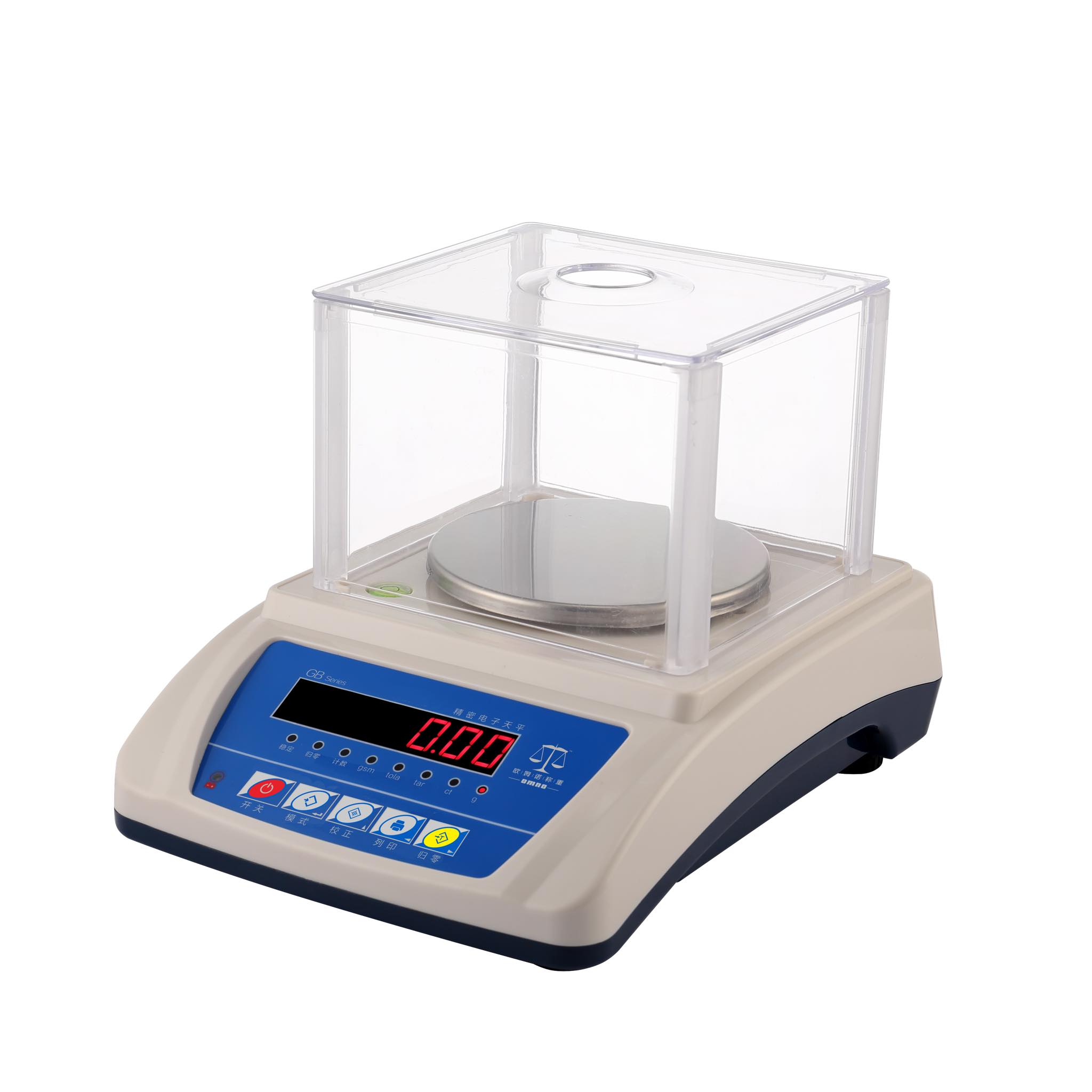
the analytical laboratory balance is defined by its extreme sensitivity, typically measuring mass in the sub-milligram range ($0.1\text{ mg}$ or $0.0001\text{ g}$). For a high-functioning lab, the focus has shifted from simple weighing to "smart" integration—featuring touchscreens, automated calibration, and direct cloud data transfer.
+1
1. Top Analytical Balances for 2026
|
Model |
Capacity / Readability |
Calibration |
Key Feature |
Price Range (USD) |
|
Mettler Toledo MR Series |
Up to $220\text{ g}$ / $0.1\text{ mg}$ |
FACT (Internal) |
The Workhorse: Chemical-resistant housing and "SmartPan" for 50% faster stability. |
$3,800 – $9,500 |
|
Sartorius Quintix Pro |
Up to $520\text{ g}$ / $0.1\text{ mg}$ |
isoCAL (Internal) |
User-Centric: 7-inch smartphone-style touchscreen and motorized auto-leveling. |
$4,500 – $7,500 |
|
A&D Apollo GX-AE |
Up to $220\text{ g}$ / $0.1\text{ mg}$ |
Internal |
Static Control: Built-in fanless ionizer to neutralize powder charges in <1s. |
$3,500 – $6,000 |
|
Sartorius Cubis II |
Modular (up to $0.01\text{ mg}$) |
isoCAL |
Pharma Grade: Full 21 CFR Part 11 compliance and modular hardware/software. |
$10,000 – $25,000+ |
|
Ohaus Pioneer PX |
Up to $220\text{ g}$ / $0.1\text{ mg}$ |
InCal (Internal) |
Budget Choice: Cast-metal lower housing and dual-line display for basic lab work. |
$1,000 – $3,800 |
2. Modern 2026 Features to Look For
- Fully Automatic Calibration (FACT/isoCAL): Essential for $0.1\text{ mg}$ accuracy. These balances detect temperature or pressure changes and re-calibrate themselves automatically, ensuring data integrity without user intervention.
- Touchless Operation: High-end models feature IR sensors. You can wave your hand to open the draft shield doors or Tare the scale, which is critical for preventing cross-contamination in chemistry or bio-labs.
- Direct Data Transfer (HID): Many 2026 units support USB-C "Keyboard Mode." When you press 'Print,' the balance types the weight directly into an open Excel cell or lab notebook without needing special driver software.
- Integrated Static Control: Static electricity is the leading cause of "drifting" numbers. Choosing a model with a built-in ionizer (like the A&D Apollo) is a game-changer for weighing fine powders into plastic weigh boats.
3. Critical Setup Requirements
The Stability Rule: An analytical balance is only as good as its surface. To achieve $0.1\text{ mg}$ precision, you must use a stone-topped anti-vibration table. Standard office or lab benches will cause "digit flickering" from foot traffic or building ventilation.
Warm-Up Period: In 2026, most balances feature a "Standby" mode. If the balance is completely unplugged, it requires 30–60 minutes of being powered on to reach thermal equilibrium before accurate weighing can begin.
4. Comparison: Sartorius vs. Mettler Toledo
- Mettler Toledo: Generally considered the "Gold Standard" for hardware durability and longevity. Their SmartPan design is excellent for labs with high air-flow (near fume hoods).
- Sartorius: Leads in software and user interface. Their motorized leveling is a standout feature for 2026, as it ensures the balance is always perfectly aligned with gravity, a common source of error for human operators.